.webp)
.webp)
Brisk Teaching Blog
Your go-to spot for innovative ideas and teacher-tested strategies you can try tomorrow.
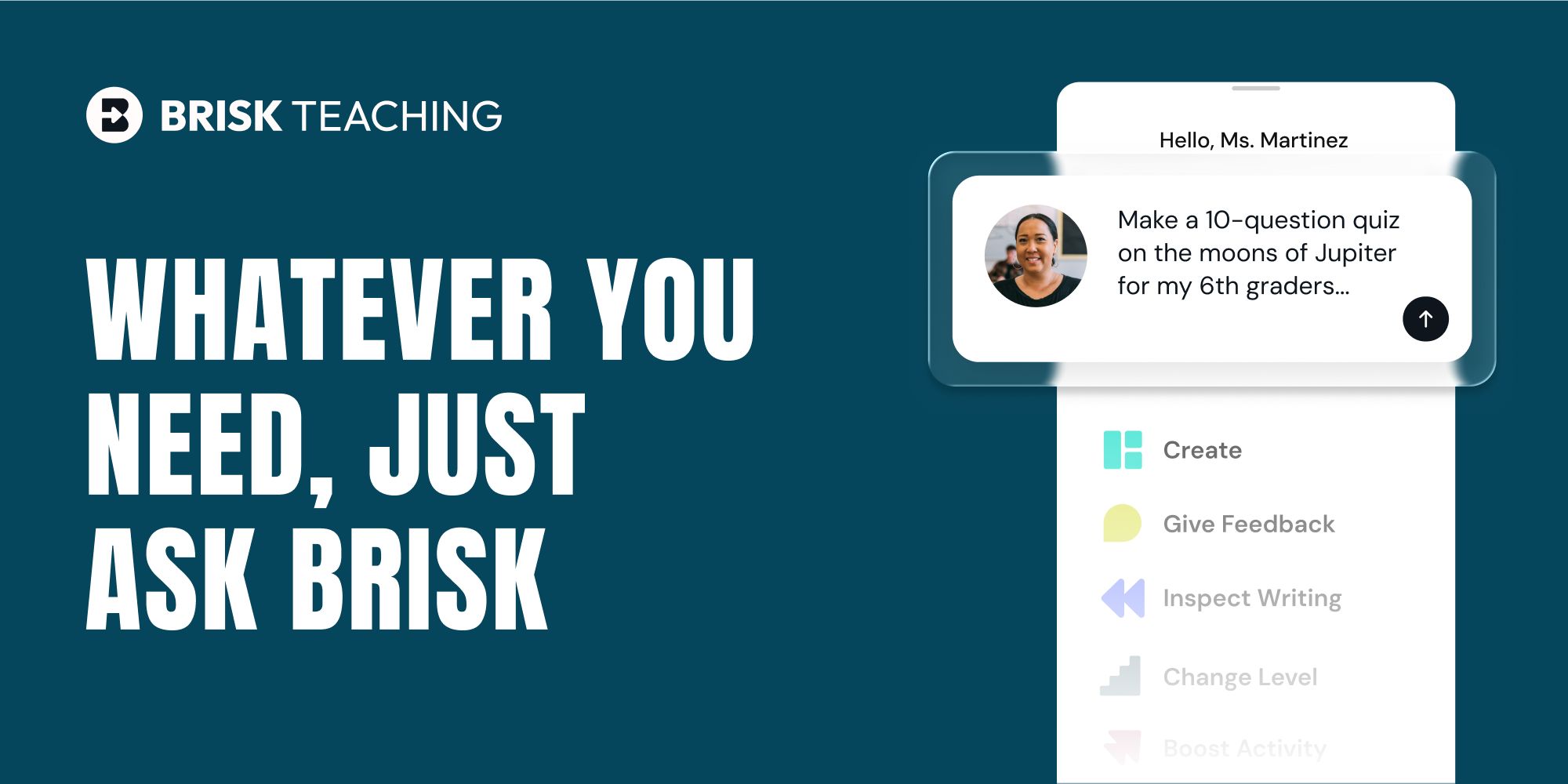
Meet the New Brisk: Create Teaching Resources Through a Conversation
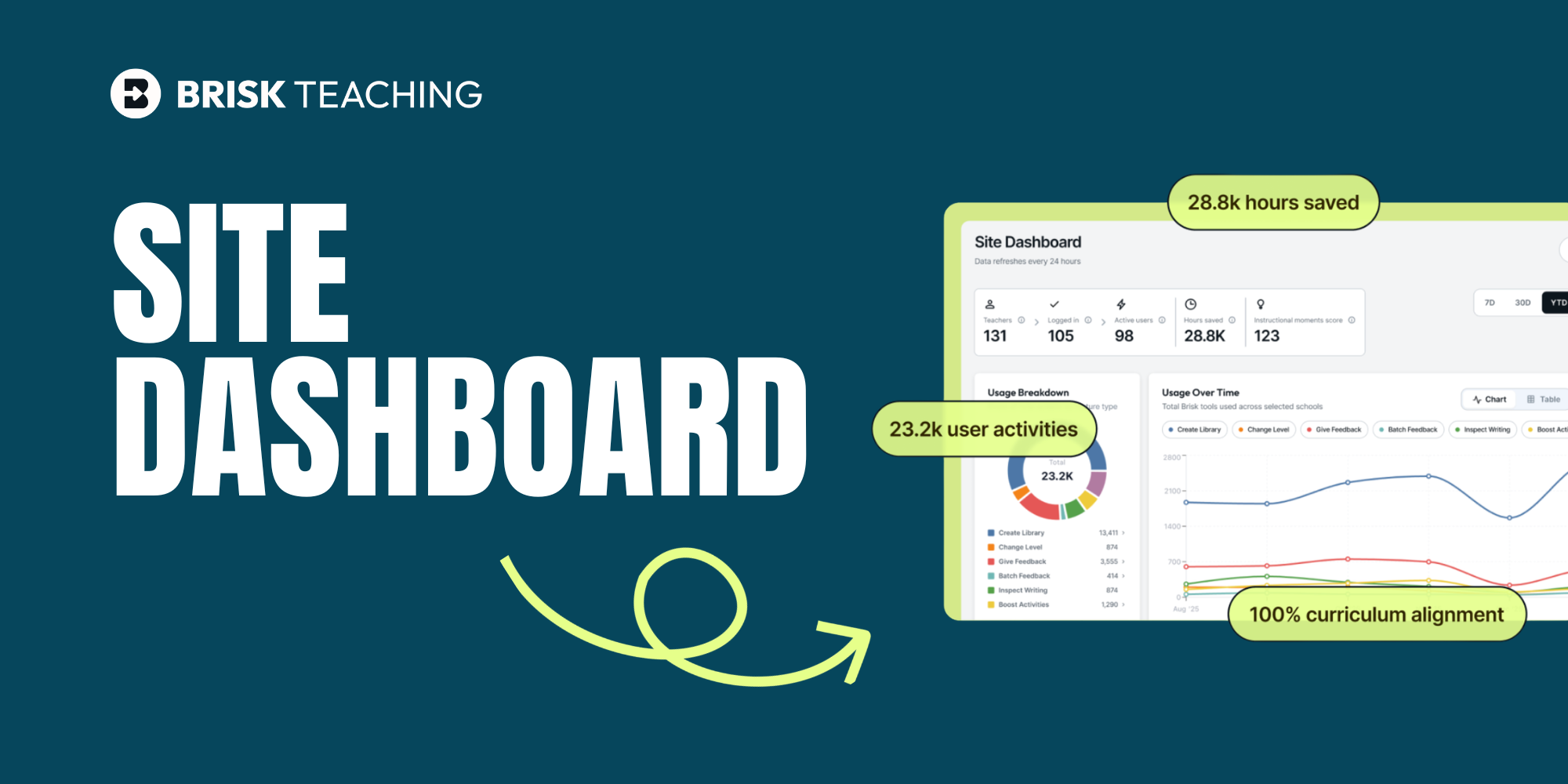
Your AI Investment Is Working. Now You Can Prove It.
Explore

Turn Any Content Into a Podcast Students Will Love
Brisk Teaching's newest feature makes creating podcasts from any material effortless. Whether you want to bring a lesson to life, support multilingual learners, or give students more ways to access content, this tool is about to become a go-to in your teaching toolkit.

Brisk Teaching Earns a 93% Common Sense Privacy Rating
From day one, Brisk Teaching has been committed to protecting student, teacher, and school data. That’s why we’re proud to share that Brisk has earned a 93% privacy rating from Common Sense – the highest score among AI tools. This rating is a reflection of our dedication to providing safe, responsible, and effective AI-powered tools for the classroom.

The Smart Teacher’s Guide to Lesson Planning
Let's talk about lesson planning—aka that thing that makes most of us want to curl up under our desks with a giant cup of coffee. Sure, it translates into hours of admin work that feels like weeks. But here's the thing: a solid lesson plan is like your teaching GPS. Once you've got your goals, activities, and assessments mapped out, teaching feels less like herding cats and more like... well, teaching. If you've been staring at your laptop wondering how to make your next lesson plan work, we've got you covered.

How to Design Quizzes That Help Students Learn

6 Super Creative Turkey Disguise Ideas to Try Out for Thanksgiving
Thanksgiving week is when classrooms transform into creative havens, and turkeys go into witness protection. The Turkey Disguise Project isn't just another craft activity to keep kids busy (though that's a nice bonus). It's a genius way to spark creativity and teamwork while letting kids' imaginations run wild. The mission? Help a 2D turkey avoid becoming dinner by giving it a clever disguise. Let's explore some fun themes that will have your students plotting turkey escape plans in no time.

Be An Author Month 2025: Brisk x Book Creator
Celebrate Be an Author Month 2025 with Brisk & Book Creator! Empower students to write, publish, and share their stories. Learn more today!

Virtual Classroom Google Slides Template for Teachers
Teachers are the unsung heroes of our society, juggling lesson planning, grading, parent communications, staff meetings, and somehow finding time to eat amidst the chaos. In today's digital age, the demand for engaging and visually appealing virtual classroom materials has only intensified. Enter Brisk Teaching AI—a tool designed to streamline the creation of Virtual Classroom Google Slides Templates, allowing educators to focus more on teaching and less on design intricacies.

Give Every Student a Personal Writing Coach with Boost Writing Activities
You give your students a writing assignment, and then… the questions start rolling in. "What should I write?" "Is this good?" "How do I make it better?"

New Feature: Upload Photos to Create Lesson Content and Generate Feedback
Picture this: A student hands you a handwritten assignment – you upload it, and Brisk gives instant feedback. Or you snap a photo of your whiteboard, and Brisk transcribes it for absent students.

How to Create a Rubric: An Easy Guide for Teachers
Grading can often feel like a guessing game—and not particularly fun. Also, no teacher wants to field endless questions, such as “Why did I get this grade?” But here’s the tea: A solid rubric can be your ticket to grading sanity. Think of it as a cool teacher hack to clarify student expectations, ensure fairness, and save you hours of grading confusion. So, ready to make your life 10 times easier? Let’s break down the basics of rubric creation in five easy steps.

How to Write a Strong Recommendation Letter for a Student (+ How to Do It Faster with Brisk)
A practical guide to writing recommendation letters for students — learn what strong letters include, a sample with placeholders, and how to write them faster with Brisk.
.avif)
How SAT Practice Tests Can Help Teachers Prep Students for Success
Standardized tests like the SAT bring stress for everyone—students, parents, and, of course, teachers. And let’s be real: prepping for it can feel like trying to teach a cat to swim. But with the right strategies, you can set your students up for success without losing your sanity. Here’s how.