The first week of the school year sets the tone for the months of learning that follow. The fastest way to establish a classroom environment in which students feel comfortable talking, laughing, and taking productive risks together is to provide regular opportunities for students to build meaningful connections with each other.
A good set of get-to-know-you questions can do a lot of the heavy lifting here. These questions lower the temperature for nervous students, give quieter kids an easy on-ramp into discussions, and show you what kind of personalities you have in the room before you even start your first lesson.
Below are 60 get-to-know-you questions for students, sorted into categories you can pull from all year — not just on day one. (Skim to the grade-specific notes near the end for tips for getting the most out of these questions in your classroom.)
How to Use Get-to-Know-You Questions
While these questions are invaluable during the first week of school, they’re just as powerful in many other contexts throughout the year. In addition to using them as first-day icebreakers, always keep a few on hand for:
- Morning (or class period) warm-ups: Pose one question a day (or every Monday) to get everyone’s juices flowing.
- Exit tickets: Use a reflection question to keep students engaged during the final few minutes of class.
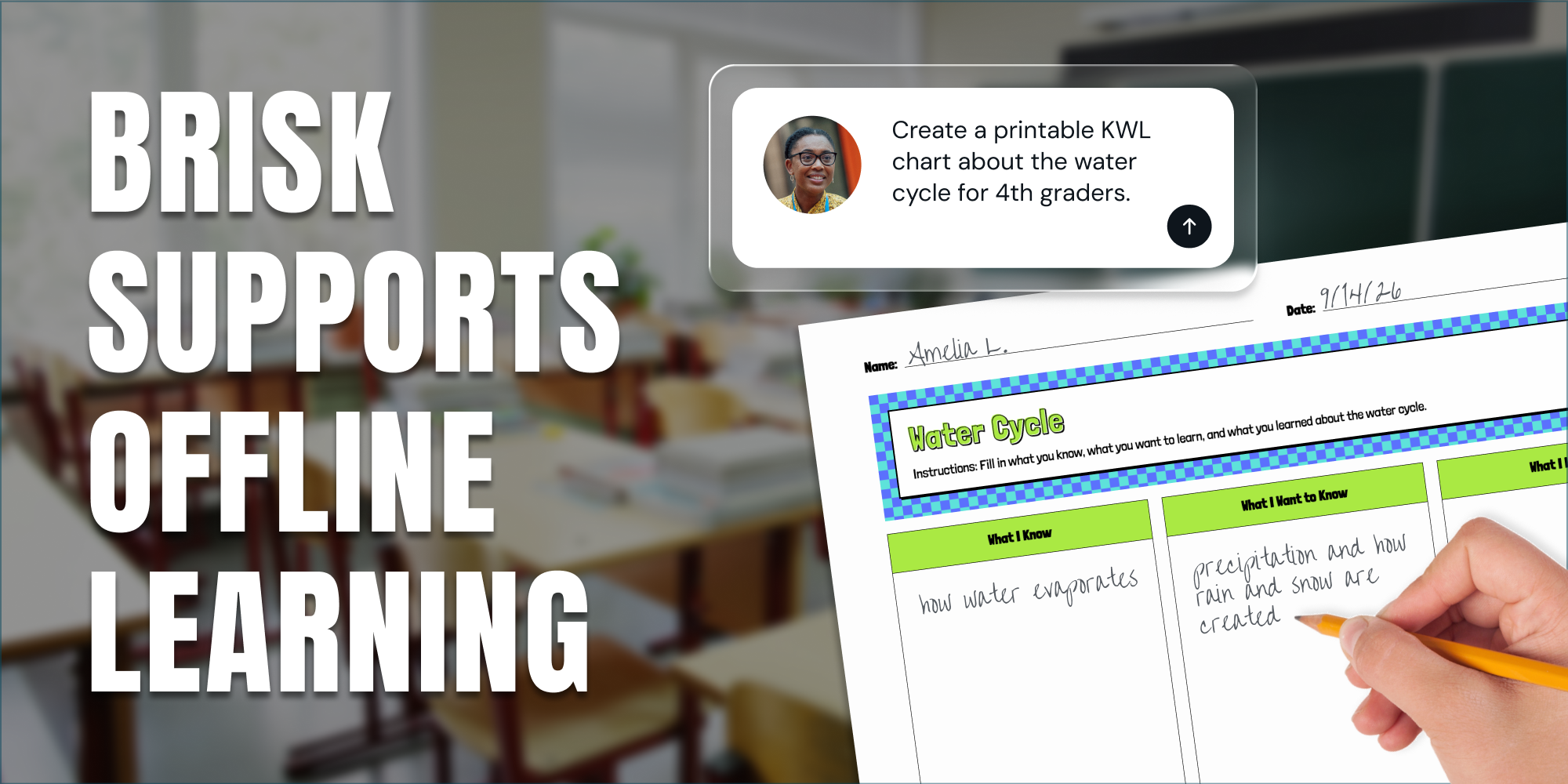
- Digital or remote learning: Drop a question into a poll, a shared doc, or a discussion board so students can answer without the pressure of the spotlight. If you want a quick set of interactive questions tailored to your grade and subject, you can generate them with Brisk Boost, a student-facing, AI-supported workspace that puts you in control of what’s shared.
Regardless of when you’re using these get-to-know-you questions, make sure you keep these best practices in mind:
- Keep it low stakes: Let students pass if a question doesn’t land for them, and answer the questions yourself so the sharing feels mutual.
- Specify a format: Pick a response format that aligns with the energy in your classroom on the day, whether it’s a turn-and-talk with a partner, a quick go-around, a written response, or a digital poll.
- Return to high-impact questions: Asking a question in September and then again in January is a great way to show students how much has changed over the course of a few months.
Icebreaker & First-Day Questions
These icebreaker questions for students invite short, low-stakes answers. Pair these with a few active icebreaker games to get everyone moving.
- What are you hoping this year will be like?
- What’s one word your friends would use to describe you?
- If we were going to pick a mascot for our class, what should it be?
- What’s something you’re looking forward to this year?
- What makes a classroom feel like a good place to be?
- What’s a fun fact about you that surprises people?
- What fictional world would you like to live in?
- What’s the farthest you’ve ever traveled from home?
- If you could switch places with anyone for a day, who would it be?
- What makes you feel welcome in a new group?
Fun & Favorites Questions
Easy, low-pressure questions are perfect for any time you need a quick warm-up.
- What’s something you’re really good at that most people don’t know about?
- If you had to eat only one meal for the rest of your life, what would it be?
- What’s the best movie or show you’ve watched recently?
- What song do you have on repeat right now?
- What’s your favorite way to spend a Saturday?
- If you could instantly master any skill, what would it be and why?
- What’s a book, game, or hobby you could talk about forever?
- What’s your go-to snack?
- What’s the best gift you’ve ever received?
- If you had a whole day with no plans, what would you do?
This-or-That & Would-You-Rather Questions
These this-or-that-questions for students promote whole-class participation. For a more active experience, let students respond with a hand gesture or by walking to one side of the room or the other.
- Summer or winter?
- Sweet or salty?
- Early bird or night owl?
- Books or movies?
- Mountains or beaches?
- Would you rather be able to fly or be invisible?
- Would you rather never have homework or never have a test again?
- Would you rather explore space or the deep ocean?
- Would you rather always be 10 minutes late or 20 minutes early?
- Would you rather have a rewind button or a pause button for your life?
Getting Comfortable Questions
A step past the icebreakers, these questions help students share a little more about themselves once the classroom has been established as a welcoming environment.
- Who’s someone you look up to, and why?
- What’s something you’ve worked hard to get better at?
- What’s a tradition your family or friends have?
- When do you do your best thinking?
- What’s a mistake that taught you something?
- What’s something that always makes you laugh?
- Where’s your favorite place to be?
- What’s a small thing that makes any day better?
- What have you been curious about lately?
- What’s something you’d love to spend more time doing?
Questions About Learning & School
These are the kinds of questions to ask students when you want insights you can incorporate directly into your teaching — how students learn, what helps them, and what gets in their way.
- What’s a subject or topic you genuinely enjoy?
- How do you like to work best: alone, in pairs, or in a group?
- What helps you focus when things get noisy or busy?
- What’s something a teacher has done that really helped you?
- When you’re stuck, what do you usually do first?
- What does a good day at school look like for you?
- What’s something you wish teachers understood about you?
- How do you like to get feedback on your work?
- What’s a goal you have for this year?
- What’s one thing that would make this class better for you?
Social-Emotional Learning Questions
Save these questions for later in the year, as they require a certain level of trust and familiarity among students.
- What does being a good friend mean to you?
- When was a time you felt really proud of yourself?
- How can you tell when someone’s having a hard day?
- What helps you calm down when you’re frustrated?
- What’s something kind someone did for you that you still remember?
- Who do you go to when you need help?
- What are you grateful for right now?
- What’s something you’d like to get better at as a classmate?
- What makes you feel respected?
- What inspires you?
Picking the Right Questions for Your Grade
- Elementary school: Start with favorites and this-or-that questions. As you incorporate more complex questions, provide your answer first as a way to model what a complete response looks like. Movement voting — e.g., walking to the “sweet” side of the room or the “salty” side of the room — can help keep younger learners engaged.
- Middle school: Make sure students are comfortable by using low-spotlight formats like written responses, anonymous polls, or partner shares before jumping into whole-class go-arounds. (Pro tip: Students at this age love debating would-you-rather questions.)
- High school: Lean into the learning styles and SEL questions. Older students can handle real reflection, and they notice when you incorporate what they share into your teaching. Frame the conversations as “help me teach you well,” not just “share your feelings.”
Frequently Asked Questions
What makes for a good get-to-know-you question for students?
Early on in the school year, the best questions are specific, low stakes, and easy to answer in a sentence — favorites, would-you-rather choices, and light “tell me about yourself” prompts. Save deeper reflection questions for once you’ve built a positive classroom dynamic.
How do you use get-to-know-you questions in the classroom?
Use them as first-day icebreakers, daily warm-ups, exit tickets, or digital polls. Give students a clear format (partner talk, go-around, written response), let them pass, and answer each question yourself.
What questions can I ask to get to know my students better as learners?
Ask about what they enjoy learning, what helps them focus, and what they wish teachers understood. The answers will give you insights you can teach with, not just fun facts.
When should I use get-to-know-you questions?
The first week of school is the most obvious opportunity, but they’re just as useful after long breaks, when a new student joins your class, or any time you want to reset class energy.
Start the Year by Connecting with Your Students
You don’t need to step into the classroom on the first day of school and ask 60 get-to-know-you questions. In fact, you really shouldn’t — that might scare students a little.
Instead, pick five of your favorites for the first day, keep a few in your back pocket for slow moments, and work your way toward the deeper questions as trust develops. The questions may be simple, but the payoff can be huge: A class that knows each other, trusts you, and is ready to learn together.
Want to generate your own get-to-know-you questions in seconds? Use Brisk's Create Anything tool to generate a list of get-to-know-you questions tailored to your classroom needs in seconds. Free to use for teachers — get started with Brisk today.