All Blog Posts

New Feature: Upload Photos to Create Lesson Content and Generate Feedback

...Total game changer, right? Well, it's a reality! You can now upload photos to Brisk, and Brisk will turn them into whatever you need. Whether it’s handwritten work, a textbook page, or a classroom diagram, Brisk recognizes and reads your image, then makes it instantly usable.

How to upload images to Brisk:

  1. Open the Brisk extension on your computer.
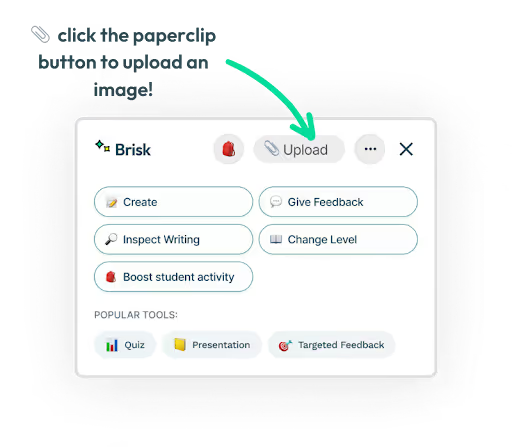
  2. Click the paperclip icon on the top right. 📎
  3. Select "Image" when asked for the input source.
  4. Choose the image file you'd like to upload.
  5. Use the Brisk menu as you normally would to Create, Give Feedback, Change Level, or Boost Student Activity

💡 Pro Tip: Drag your image directly onto the Brisk extension to skip right to step 5!

Ideas for using images with Brisk

Want some inspiration for how to use images with Brisk? Here are some ideas to get you started.

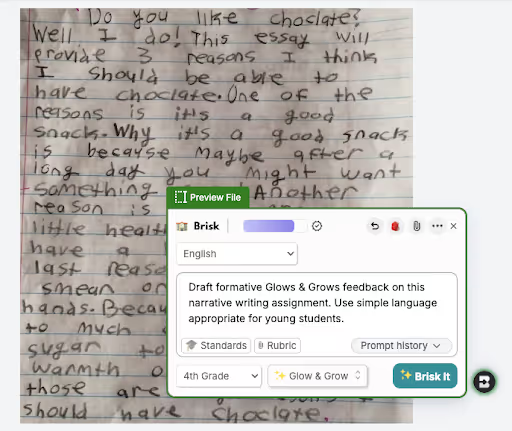
Generate feedback on photos of students' work.

No more squinting at tiny handwriting or struggling to type out feedback. Upload a photo of a student’s handwritten work, and Brisk will analyze it, offering suggestions, corrections, or even full feedback in seconds. You can refine the comments and return them with just a few clicks – saving time while giving students valuable insights.

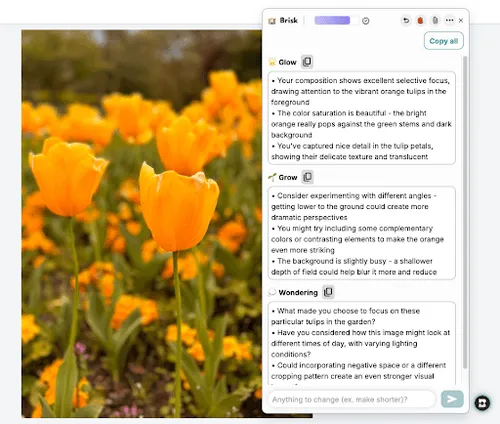
💡 Pro Tip: This works for more than handwritten essays! Try generating feedback on a student’s art or photography assignment, like the one pictured below.

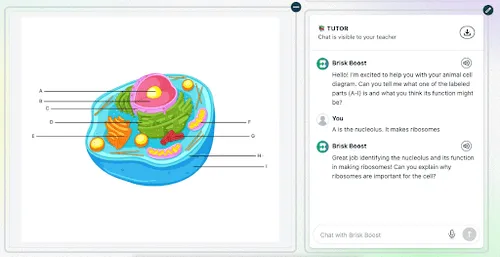
Use Boost to encourage deeper thinking about a map, diagram, or math image.

Got a historical map, a biology diagram, or a math problem? Upload it to Brisk and use Boost Student Activity to generate critical-thinking questions that get students analyzing and explaining. It’s a great way to turn static images into engaging learning moments – without spending extra time crafting questions yourself!

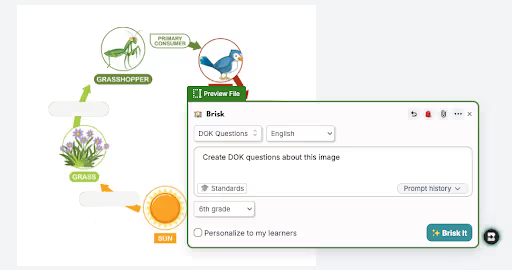
Create Depth of Knowledge Questions about an image.

Upload a map, diagram, historical photo, or math problem, and Brisk will generate Depth of Knowledge (DOK) questions to spark deeper thinking. From identifying key details to making predictions and analyzing patterns, Brisk helps students engage with images in more meaningful ways – without extra prep from you!

More ways to use images with Brisk:

  • Create guided notes or an exit ticket from a photo of the whiteboard.
  • Turn a textbook page into a lesson plan or slide presentation.
  • Create a student exemplar from a math triangle diagram.
  • And more!

What creative ways will you use images with Brisk? 

Tag @briskteaching on social media, or email info@briskteaching.com for a chance to be featured in our next community spotlight.

Latest Posts

Latest from the Brisk Blog

Explore practical articles for K–12 educators, from classroom-ready strategies to thoughtful guidance on using AI in ways that support real teaching.

Library shelves filled with books
September 14, 2026
Brisk Features

Print It, Project It, or Skip the Screen: How Brisk Fits Any Classroom

Brisk provides teachers with a variety of ways to support student learning, even when they’re focused on scaling back screen time in their classrooms.

Library shelves filled with books
August 14, 2026
Thought Leadership

Brisk in New White Paper on AI's Instructional Impact

Brisk founder Arman Jaffer shares his key takeaways from Whiteboard Advisors’ new white paper on measuring the instructional impact of AI in the classroom.

Library shelves filled with books
July 27, 2026
Tips for Teachers

60 Get-to-Know-You Questions for Students (For Every Grade)

60 get-to-know-you questions for students, organized by category and grade — plus, easy ways to use them for icebreakers, morning warm-ups, and first-day connection.

Library shelves filled with books
8
min
January 31, 2025
Science Resources

10 Fun Hands-On 4th Grade Science Experiments

As a 4th-grade teacher, you know how important it is to keep young minds engaged. Science is one subject where curiosity can really take off, and the best way to spark that curiosity is through fun, hands-on experiments. There are so many options from Earth sciences, life science, and the solar system. We guarantee there’s no shortage of opportunities for 4th graders to experiment and explore. Let’s explore 10 exciting 4th grade science experiments that are simple to set up but packed with opportunities for critical thinking, problem-solving, and most importantly, fun. Plus, we'll highlight how Brisk Teaching AI can support you in bringing these experiments to life in your classroom.

10 Simple, Fun, and Engaging Science Experiments for 4th Graders

We’ve got you covered with 10 simple, fun, and engaging experiments that will have your students exploring everything from chemical reactions to the solar system. These experiments are not only easy to set up but also packed with opportunities for critical thinking and learning. 

1. Balloon Rocket: A Lesson in Reaction Time and Physics

Get ready for a fun activity that teaches reaction time and simple physics. For this experiment, you’ll need a balloon, string, straw, and a rubber band. The idea is to attach the balloon to a string and let it race across the room. This simple science experiment shows how air pressure and force propel the balloon forward.

This experiment is easy to set up with simple supplies like a plastic bag or straw and will get kids of all ages thinking about magnetic fields, force, and motion. Plus, it’s a cool experiment to share on TikTok or your classroom’s social media page to inspire other teachers!

2. Magic Soap Bubble Experiment: Exploring Surface Tension

Soap bubbles might seem like simple fun, but they provide a perfect opportunity to discuss surface tension. Using dish soap, water molecules, and a variety of different materials (like aluminum foil, pipe cleaners, or plastic bags), students can experiment with what makes the bubbles hold their shape or pop.

Try adding food coloring for a visually exciting experiment that will get 4th graders asking questions about the properties of water molecules and surface tension. They’ll be amazed at how the soap bubble forms and stays intact!

3. Lemon Juice Chemical Reaction: Exploring Chemical Reactions

For a simple but spectacular chemical reaction, try this experiment with lemon juice, baking soda, and potassium iodide. Students can experiment with different amounts of lemon juice and baking soda to watch how the reaction changes. You’ll also introduce them to different solutions, and how a chemical reaction can produce gas, changing the way materials behave.

As a fair project idea, students can test which materials create the most noticeable reaction time, or even compare the results of cold water vs. room temperature liquids. It’s a fun way to teach students about basic chemistry while they enjoy the fizzing magic!

4. Solar Oven: Harnessing the Power of the Sun

A solar oven is a classic experiment that’s as educational as it is enjoyable. Using a pizza box, aluminum foil, plastic wrap, and a few basic materials, students can create an oven powered entirely by the solar system. The best part? It allows for experimentation with reflective materials to enhance the oven’s heating power.

This hands-on activity teaches 4th graders about natural resources and how the sun’s energy works while providing them with the perfect opportunity to explore environmental science. Your students can try cooking s’mores or heating ice cubes, we promise they’ll be amazed at how the solar oven works.

5. Blind Taste Test: Exploring the Human Body

The blind taste test experiment is a fantastic way to get students thinking about the human body and the importance of hand-eye coordination. Set up a testable question to see if the students can identify the different colors or flavors of food when they can’t see them. You could use everyday items like lemon juice, baking soda, and common household items to test their sense of taste and smell.

This fun experiment also offers a chance to discuss critical thinking and the science behind how we experience food and flavors. Make sure to have students record observations to track their responses and conclusions.

6. Balloon Rocket and Static Electricity

This cool experiment combines reaction time and static electricity. For this experiment, you’ll need a balloon, a string, and a plastic soda bottle. Rub the balloon on your hair to create static electricity and watch how the balloon sticks to the wall or moves when placed near certain objects. It’s a great opportunity to explore how static electricity works and can even lead to discussions on magnetic fields.

Students can experiment with different materials to see how static electricity behaves and what it can attract. It’s a simple science experiment that shows how the laws of physics apply in real-world scenarios.

7. Rock Cycle in a Bag

The rock cycle is an excellent hands-on activity for teaching 4th graders about earth sciences. For this experiment, you’ll need a plastic bag, crushed chalk or colored sand, and water. Students can simulate the different stages of the rock cycle (igneous, sedimentary, and metamorphic) by manipulating the materials inside the bag, shaking it, and observing how the rocks change.

This experiment helps elementary students understand how rocks form and break down over time, and it’s a perfect introduction to the rock cycle in a fun, engaging way.

8. Wind Turbine: Harnessing Wind Energy

This experiment teaches physical science by exploring how wind energy can be converted into motion. Using pipe cleaners, aluminum foil, and a soda bottle, students can create a simple wind turbine. When the wind blows on the turbine, it starts to spin, demonstrating how wind can be converted into energy.

This experiment introduces students to concepts like natural resources and renewable energy, which are important topics in environmental science. It’s a great way to connect science activities to real-world applications.

9. Plant Growth: A Lesson in Life Science

For this experiment, students will observe how plants grow in different conditions. Using paper towels, seeds, and water, students can create a mini greenhouse to observe plant growth over time. By testing different conditions (such as light, water, and soil types), students can learn about the factors that affect plant growth and discuss the life cycle of plants.

This hands-on experiment will help 4th graders connect to important life science concepts and learn how plants grow in a natural environment.

10. Soap and Water Molecules: The Power of Capillary Action

This experiment involves water molecules, dish soap, and paper towels to demonstrate capillary action. Students will dip the edge of a paper towel into a cup of water and watch as the water moves up the towel, demonstrating how plants use capillary action to absorb water from the ground.

This is a great opportunity to discuss water molecules and how they behave in nature. It also shows students how even small forces like surface tension can have a big impact on how things work.

How Brisk Teaching Can Help with These Science Experiments

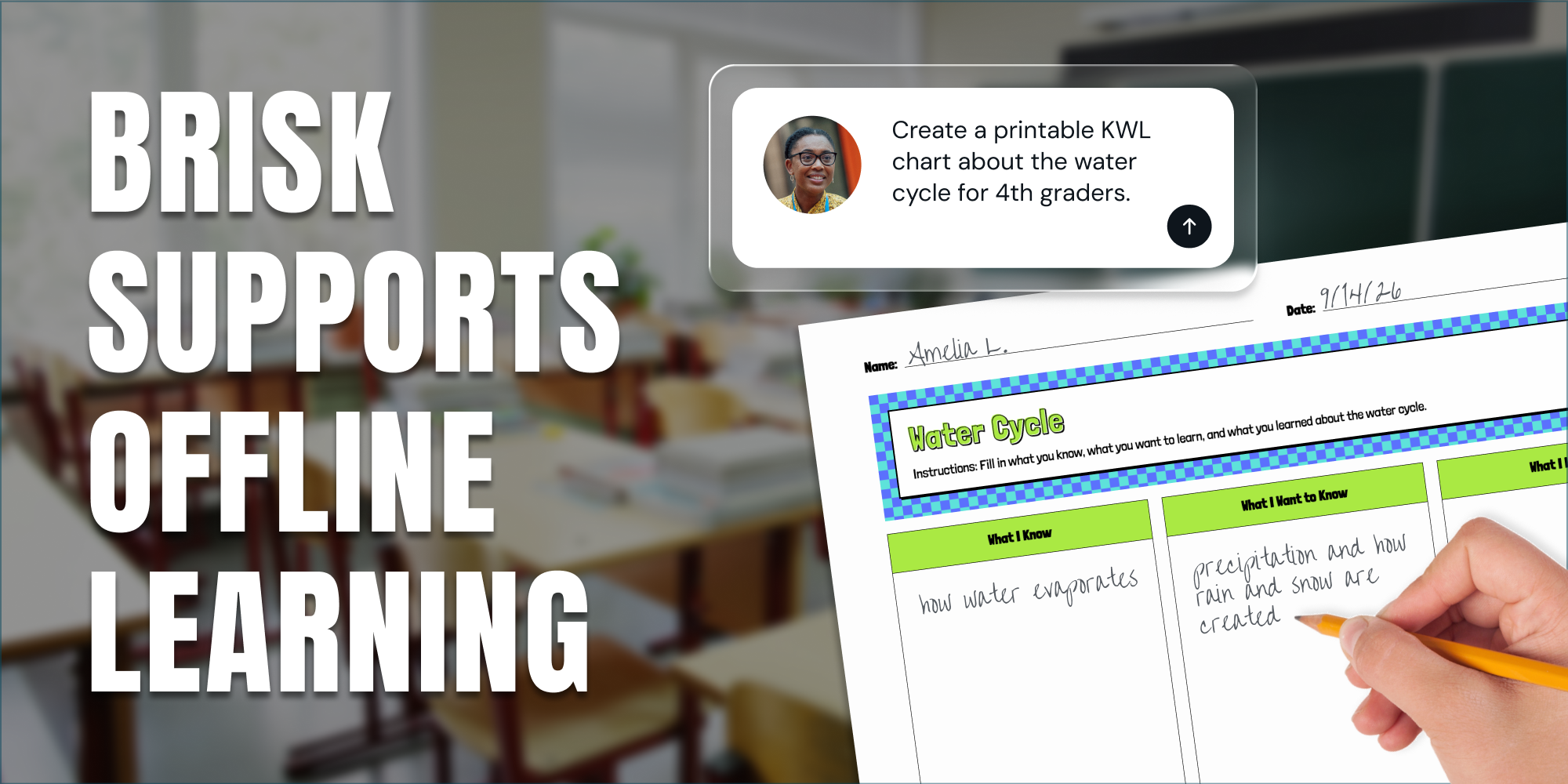
At Brisk Teaching, we understand how important it is for teachers to have easy access to engaging 4th grade science experiments that complement the science curriculum. That’s why we’ve developed tools to help make your lesson planning easier. From printable templates for organizing your experiments to supplies lists, and lab worksheets, we provide you with the tools to make classroom science experiments run smoothly.

When using Brisk Teaching, you’ll be able to create: 

  • Printable worksheets to guide your students through each experiment, helping them track their progress and make observations.
  • Interactive activities that tie into life science, earth science, and other key concepts.
  • Step-by-step lesson plans that ensure you’re hitting all the key learning objectives.
  • Quick tips and resources for preparing experiments, including materials lists, prep time estimates, and more.

Our goal is to give you more time to focus on teaching, while we provide the tools that bring these fun science lessons to life in your classroom.

Let’s Make Science Fun!

Science doesn’t have to be complicated. With these 10 4th grade science experiments, you can inspire your students to become young scientists, excited about critical thinking, chemical reactions, and all the amazing things that science has to offer. Whether you’re testing magnetic fields, learning about the rock cycle, or experimenting with static electricity, the key is to keep it hands-on and fun.

Brisk Teaching is here to support you every step of the way. With our resources, you’ll have everything you need to create the best 4th grade science projects and turn your students into the scientists of tomorrow. So grab your balloon rocket and get ready to ignite some curiosity in your classroom today!


Library shelves filled with books
8
min
December 21, 2023
Brisk Features

Craft Personalized Student Feedback in Seconds

We're revolutionizing student feedback with AI. Read about new updates in Brisk that make the '💬 Give Feedback' button even more powerful for teachers.

Giving students feedback just got more... Brisk! Our latest updates are designed to make giving feedback faster and easier, gifting you more time back in the New Year. We hope you love what's new below:

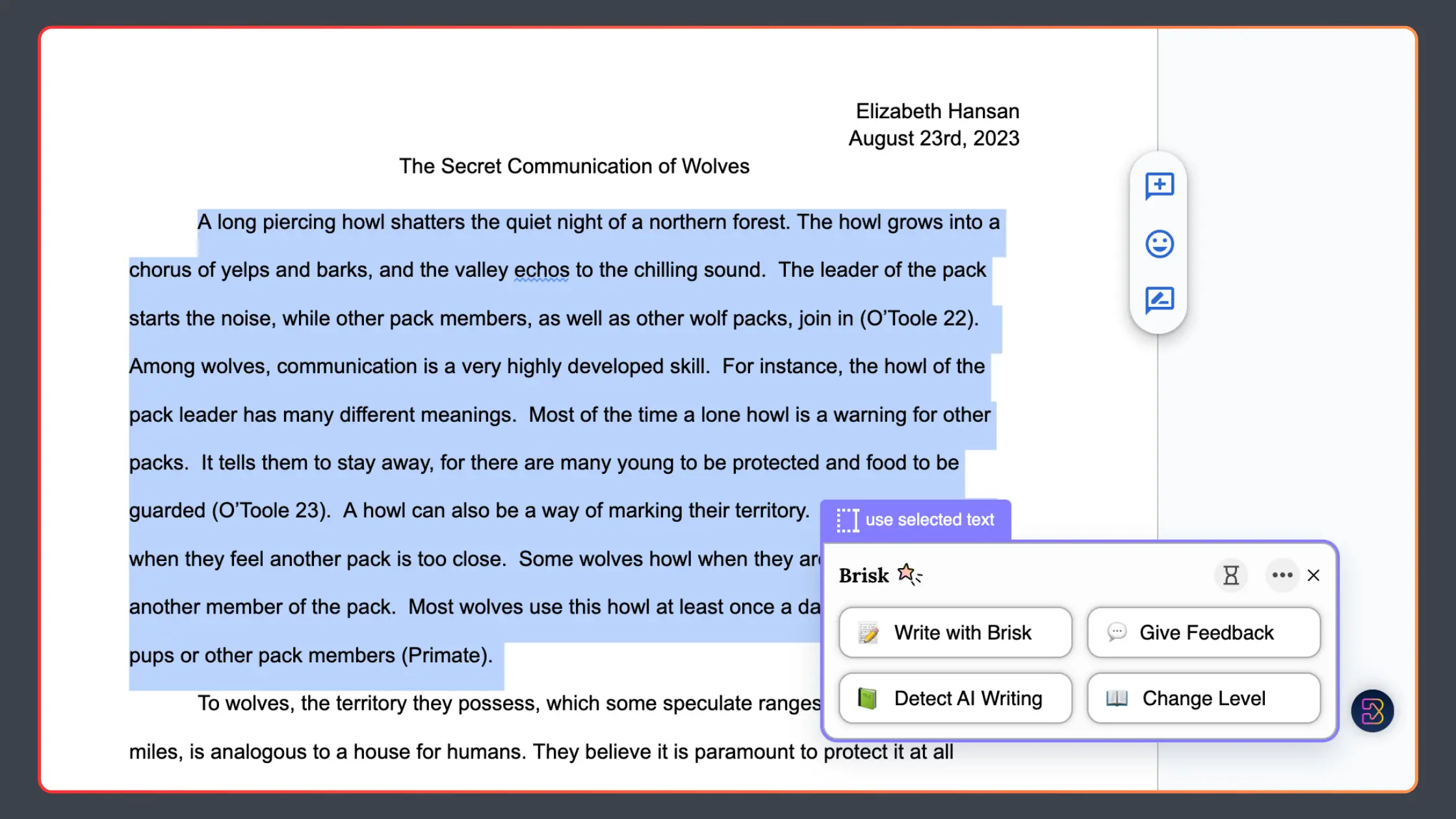
✂️ GIVE FEEDBACK (& MORE) ON SPECIFIC SEGMENTS

You asked, and we built it! In addition to working with entire docs and articles, you can now use Brisk on specific text segments. Here's how: Simply select a segment of text within any doc, article, etc. Then use Brisk to give feedback, write & generate resources, detect AI writing, and/or change the reading level on that segment. We think this is truly a game changer!

AI tools to give students feedback, save teachers time

💡 INTRODUCING RUBRIC CRITERIA & NEXT STEPS

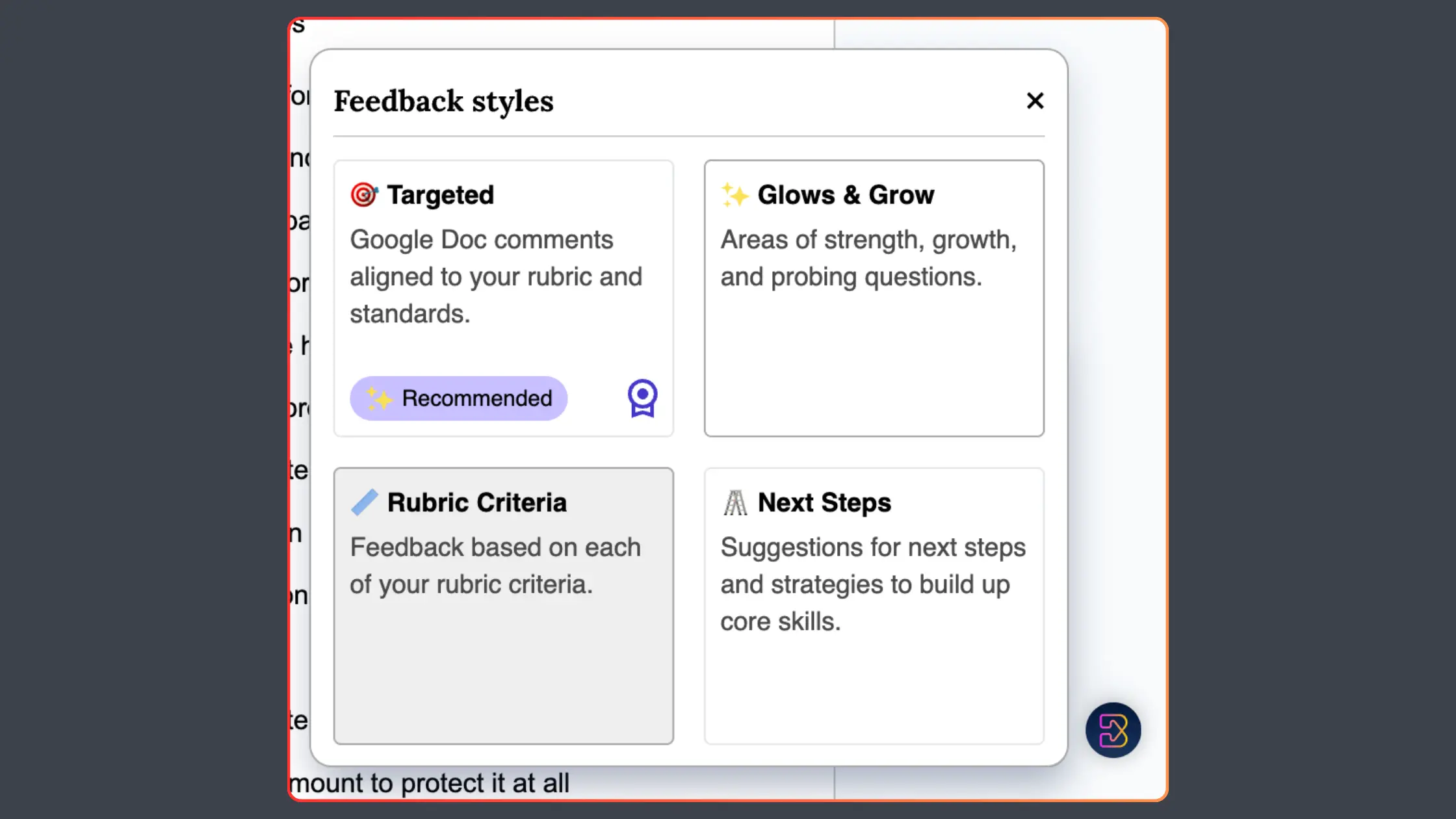
We've created more ways for you to give meaningful feedback to students. When you click 'Give Feedback' in Brisk, you'll see 2 new options: Rubric Criteria and Next Steps (in addition to your favorites, Targeted and Glows & Grows).

AI feedback generator for teachers, teacher time saving tools

📈 INSERT FEEDBACK INTO A TABLE

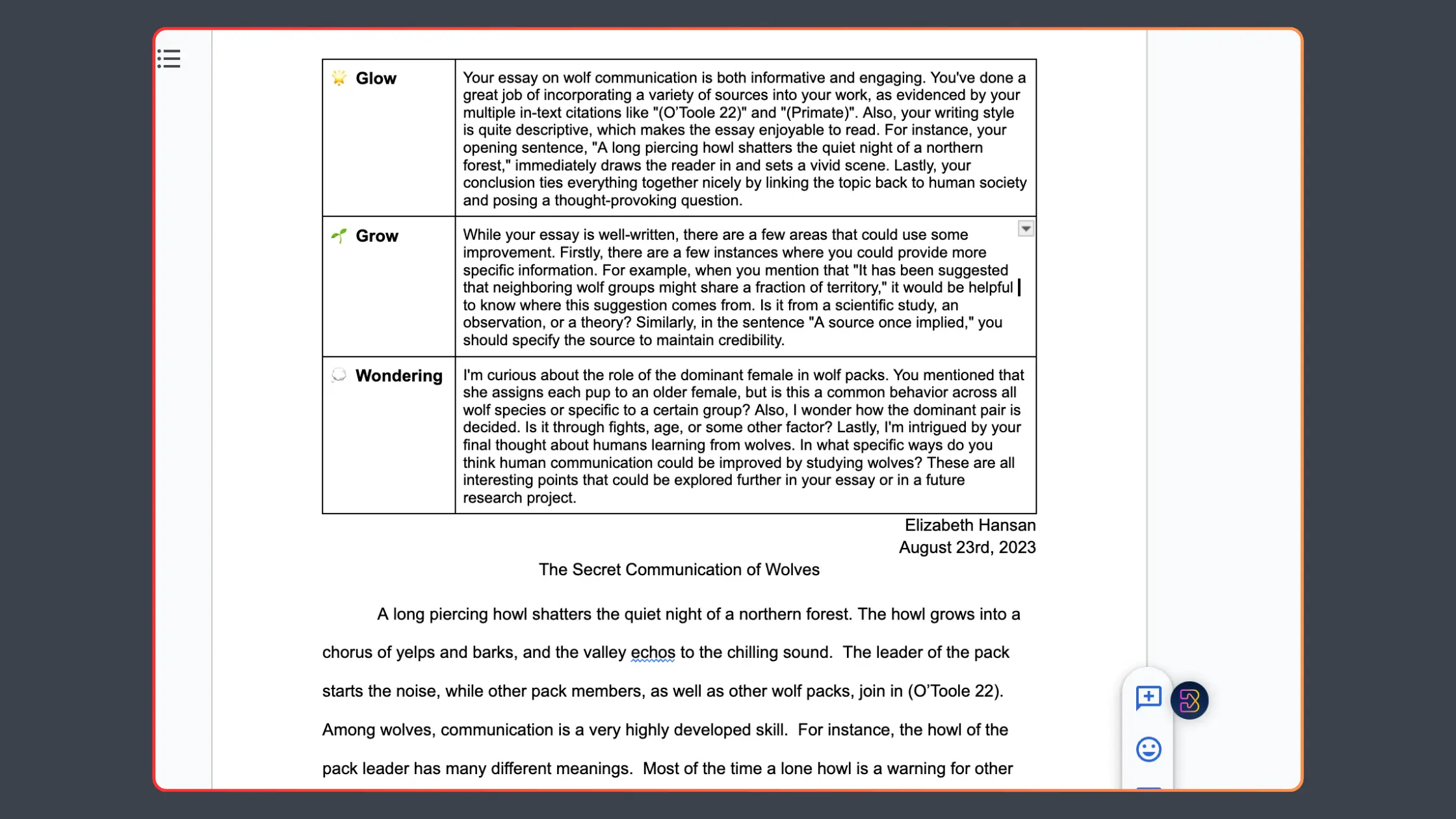
Seeking a more structured way to organize feedback? Now clicking 'Insert' will add Brisk's feedback into a table layout. With this new functionality, the feedback you provide students can be formatted to align with the structured table of your rubric, making it more clear and cohesive.

free AI websites for teachers

Brisk Teaching is the ultimate AI-powered Chrome Extension - built for educators, schools, and districts. When educators use Brisk, they cut the time it takes to prep, assess, and respond to student work in half. See you in the New Year!

Library shelves filled with books
8
min
June 4, 2024
Brisk Features

Brisk Teaching and YouTube: AI Tools Revolutionizing Your Classroom

By using the Brisk Extension, teachers can quickly create quizzes, lesson plans, and presentations from YouTube videos, saving valuable time and enhancing student engagement. We delve into various uses for Brisk-generated quizzes, including flipped classrooms, exit tickets, alternative assignments, and more. Additionally, we highlight how AI-powered tools like Brisk automate content creation, customize resources, and improve data management, making teaching more efficient. Discover how to integrate these innovative tools into your teaching strategy and transform your classroom experience today!

Are you ready to take your teaching to the next level with YouTube and Brisk? Imagine having the ability to create resources, questions, entire lesson plans, quizzes, and presentations—all from a YouTube video. With the Brisk Extension, you can do just that! Today, we'll explore how you can use Brisk with YouTube to enhance your classroom and make learning more interactive and engaging.

What is Brisk?

Brisk is an innovative tool that helps teachers create educational resources quickly and easily. By using the Brisk Extension while viewing a YouTube video, you can generate Google Docs, Forms, or Slides in seconds. These resources are automatically saved to your Google Drive for easy access and organization.

How to Use Brisk with YouTube

Using Brisk with YouTube is simple. Here’s how:

  1. Select Your YouTube Video: Choose a video that aligns with your lesson plan.
  2. Click on the Brisk Extension: While watching the video, click on the Brisk Extension.
  3. Create Your Product: Decide whether you want a Google Doc, Form, or Slides.
  4. Customize and Save: Brisk will generate your chosen Google product and save it to your Drive.

__wf_reserved_inherit

Uses for Brisk-Generated Quizzes

1. Flipped ClassroomsAssign a YouTube video for students to watch before class. Use the Brisk-generated quiz as a warm-up or entry ticket to ensure they have completed the assignment. This approach helps students come prepared, making classroom time more effective.

2. Exit Tickets: Use the quiz as an exit ticket to gauge understanding at the end of the lesson. This method helps identify any areas where students may need further instruction.

3. Alternative Classroom Assignments: When students are absent, keeping them up-to-date can be challenging. Assign a YouTube video and a Brisk-generated quiz to ensure they stay on track and understand the material upon their return.

4. Absent Classwork Make-Up: Students who miss class can watch assigned YouTube videos and complete quizzes to catch up. This strategy ensures they don't fall behind and allows you to address any gaps in their understanding when they return.

5. Station Rotation Activity: In a station rotation model, students can watch videos and complete quizzes at different stations. This method ensures that they engage with the content actively and understand it fully before moving on to the next station.

6. Interactive Video Questions: Generate interactive questions to embed in platforms like Nearpod, Quizizz, or Edpuzzle. This approach makes videos more engaging and ensures students are paying attention and comprehending the material.

7. Asynchronous Reteaching: If students struggle with certain concepts, assign a YouTube video and use a Brisk-generated quiz to check for understanding. This method allows for reteaching outside of regular class hours, providing additional support as needed.

Benefits of Using Brisk with YouTube

  • Time-Saving: Create quizzes, lesson plans, and more in seconds.
  • Easy Organization: Automatically saves resources to your Google Drive.
  • Engagement: Keeps students engaged with interactive and multimedia content.
  • Versatility: Use in various teaching scenarios like flipped classrooms, station rotations, and more.

How AI Helps Teachers Save Time

One of the most significant benefits of using Brisk with YouTube is the time it saves teachers through the power of artificial intelligence (AI). Here’s how AI can transform your teaching process:

1. Automated Content Creation: AI can analyze the content of YouTube videos and automatically generate relevant quizzes, lesson plans, and presentations. This automation reduces the time spent manually creating these resources, allowing teachers to focus more on teaching and interacting with students.

2. Customizable Resources: The AI-powered Brisk Extension allows teachers to customize the generated materials to suit their specific needs. Whether you need a detailed quiz or a comprehensive lesson plan, AI ensures that the content is tailored to your requirements, saving you from the repetitive task of creating new materials from scratch.

3. Enhanced Student Engagement: AI-generated resources from YouTube videos ensure that the materials are always fresh and engaging. This keeps students interested and motivated to learn, as the content is often presented in a format they are familiar with and enjoy.

4. Efficient Data Management: With AI, all the generated resources are automatically saved and organized in your Google Drive. This seamless integration means you can easily access, manage, and distribute materials without the hassle of manual file organization.

5. Continuous Improvement: AI learns and improves over time. The more you use Brisk, the better it gets at understanding your preferences and teaching style, making future resource creation even faster and more aligned with your needs.

So, what are you waiting for? Give Brisk Teaching a try today. After all....it's free!

`

READY TO BRING BRISK TO YOUR DISTRICT?

See how 20,000+ districts adopted AI with full compliance and teacher buy-in from day one.