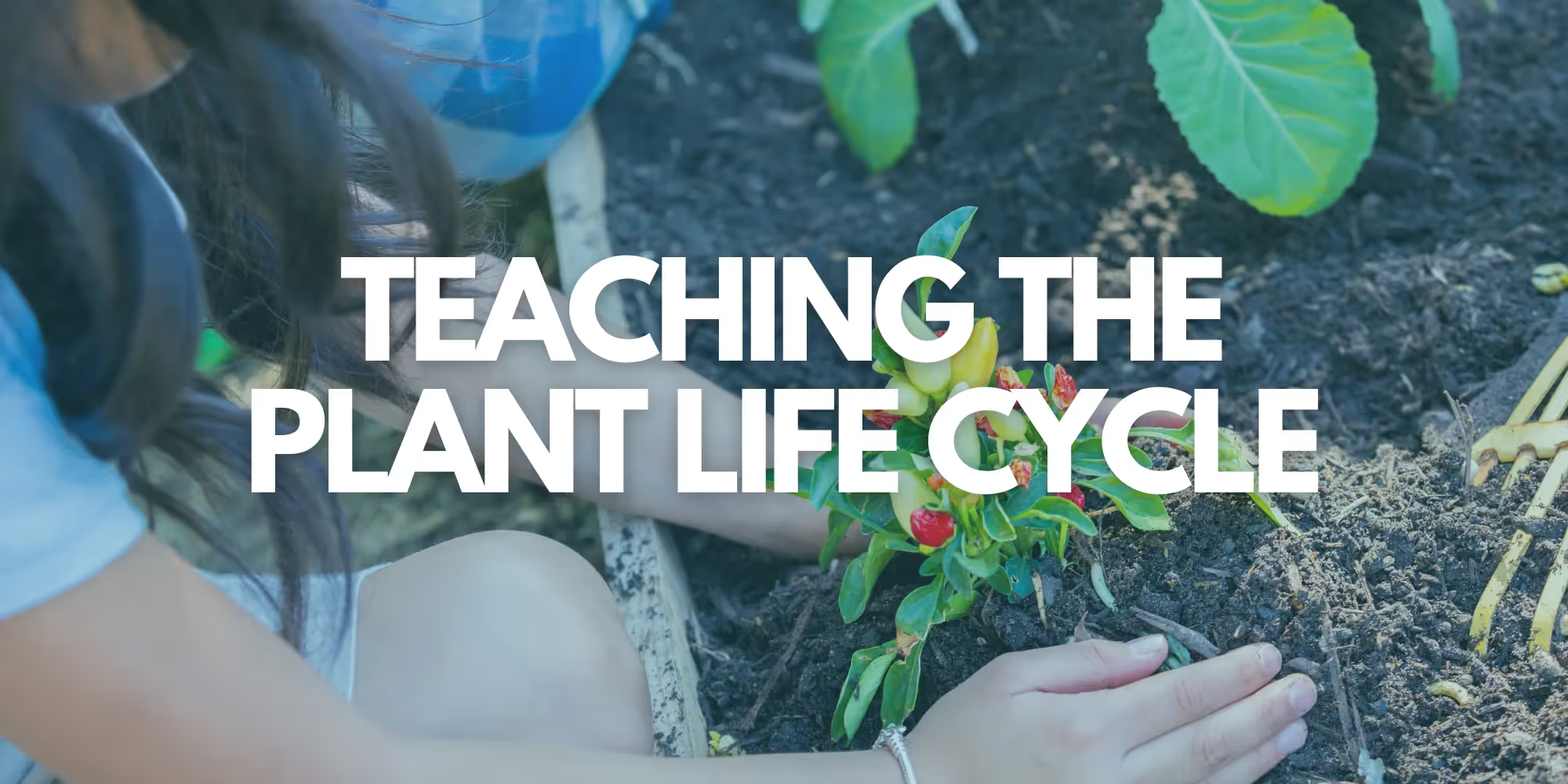
Why the Plant Life Cycle is a Key to Science Education
The plant life cycle is a key foundation in science education as it introduces students to essential biological processes like growth, reproduction, and ecosystems. It helps students develop observation and inquiry skills, understand the role of plants in the environment, and make connections to the natural world around them. By studying the plant life cycle, students also build a foundation for more complex scientific topics, such as genetics and ecology.
Creating a Lesson Plan in 2 Minutes with Brisk: Step-by-Step Guide
Step 1: Install the Brisk Extension and pin Brisk to your browser toolbar.
Step 2: Open up a blank Google Doc and click the Brisk Chrome extension (“B” icon) in the bottom right corner of your screen.
Step 3: Click the ‘Create’ button and then click ‘Lesson Plan’.
Step 4: In the text box, type: “The Plant Life Cycle introduction inquiry-based lesson using videos”
Step 5: Select the appropriate Grade level and Standard (optional).
Lesson Plan: The Plant Life Cycle
Inquiry-Based Lesson Plan for 2nd Grade, 50 minutes
Lesson Objectives
* Students will be able to describe the basic stages of a plant's life cycle.
* Students will be able to identify the key parts of a plant (roots, stem, leaves, flowers).
* Students will be able to explain how plants grow and change over time.
Common Core Standards
* CCSS.ELA-LITERACY.RI.2.3 - Describe the connection between a series of historical events, scientific ideas or concepts, or steps in technical procedures in a text.
* CCSS.ELA-LITERACY.W.2.2 - Write informative/explanatory texts in which they introduce a topic, use facts and definitions to develop points, and provide a concluding statement or section.
Materials
* Whiteboard or chalkboard
* Video on the plant life cycle (e.g. from National Geographic)
* Plant samples (real or photos) showing different stages
* Plant life cycle worksheets or activity sheets
Introduction (5 minutes)
* Ask students what they already know about how plants grow and change over time.
* Explain that today we will be watching a video to learn about the different stages in a plant's life cycle.
Viewing the Video (15 minutes)
* Show the class the video on the plant life cycle.
* Pause the video at key points to allow students to observe and discuss the different stages.
* Encourage students to ask questions and share their observations.
Discussion (10 minutes)
* Lead a discussion about the plant life cycle, recapping the key stages:
* Seed
* Germination
* Seedling
* Mature plant
* Flowering
* Fruit/seed production
* Have students identify the key parts of a plant (roots, stem, leaves, flowers) and explain how each part helps the plant grow and reproduce.
Activity (15 minutes)
* Distribute plant life cycle worksheets or activity sheets.
* Have students work in pairs or small groups to label the stages of the life cycle.
* Students can also draw and color their plant life cycle diagrams.
* Encourage them to be creative and add details about the plants.
Wrap-Up (5 minutes)
* Review the key stages of the plant life cycle.
* Ask students to share something new they learned today about how plants grow and change.
* Encourage students to observe plants in their environment and notice the different parts and stages.
The Plant Life Science Lab
Materials Needed:
- 2 small potted plants (similar types)
- Water
- Ruler
- Observation notebook
Procedure:
1. Carefully observe one of the plants. Notice the color, size, and shape of the leaves, stem, and roots.
2. Use the ruler to measure the height of the plant from the soil to the top of the tallest leaf or stem.
3. Record your observations in your notebook, including the plant's measurements.
4. Water one of the plants with 1/2 cup of water. Leave the other plant alone.
5. Observe both plants over the next few days. Notice if there are any changes in the size, color, or health of the plants.
6. Measure the height of both plants again after 3 days. Record your new measurements in your notebook.
Observation Table:

Conclusion
Observe how the watered plant and the unwatered plant change over time. What differences do you notice between the two plants? How does water affect the growth and health of a plant?
Use Brisk to Customize This Lesson Plan in Just a Few Clicks
Need to tweak this lesson plan? Easily enhance it by adjusting group work, adding scaffolded questions, or focusing on hands-on activities. Here’s how to modify it in seconds:
Step 1: Install the Brisk Extension and pin Brisk to your browser toolbar.
Step 2: Click here to make a copy of this lesson plan.
Step 3: Click the Brisk Chrome extension (“B” icon) in the bottom right corner of your screen.
Step 4: Click the ‘Something Else’ button.
Step 5: Type in the text box and ask Brisk to adjust the lesson plan for your students. The more specifics you add, the more tailored your lesson plan will be!