Set the Tone for the New School Year
Students thrive when they feel safe, valued, and inspired. And that kind of classroom doesn’t just happen. It’s built in the small, intentional moments where students get to reflect, laugh, lead, and learn with each other. That’s what these activities are designed for.
From creative icebreakers and curiosity sparks to reflection prompts and student-led challenges, this collection of back-to-school activities helps you create a space where students feel like they belong, and where learning feels meaningful, not mandatory.
While these activities are perfect for back-to-school season, they’re just as powerful anytime you want to build connection, spark curiosity, or shift the energy in your classroom. Whether you’re kicking things off with a new group, regrouping mid-semester, or hitting reset after a tough week, these ideas help you reconnect, recharge, and refocus — no matter the date on the calendar.
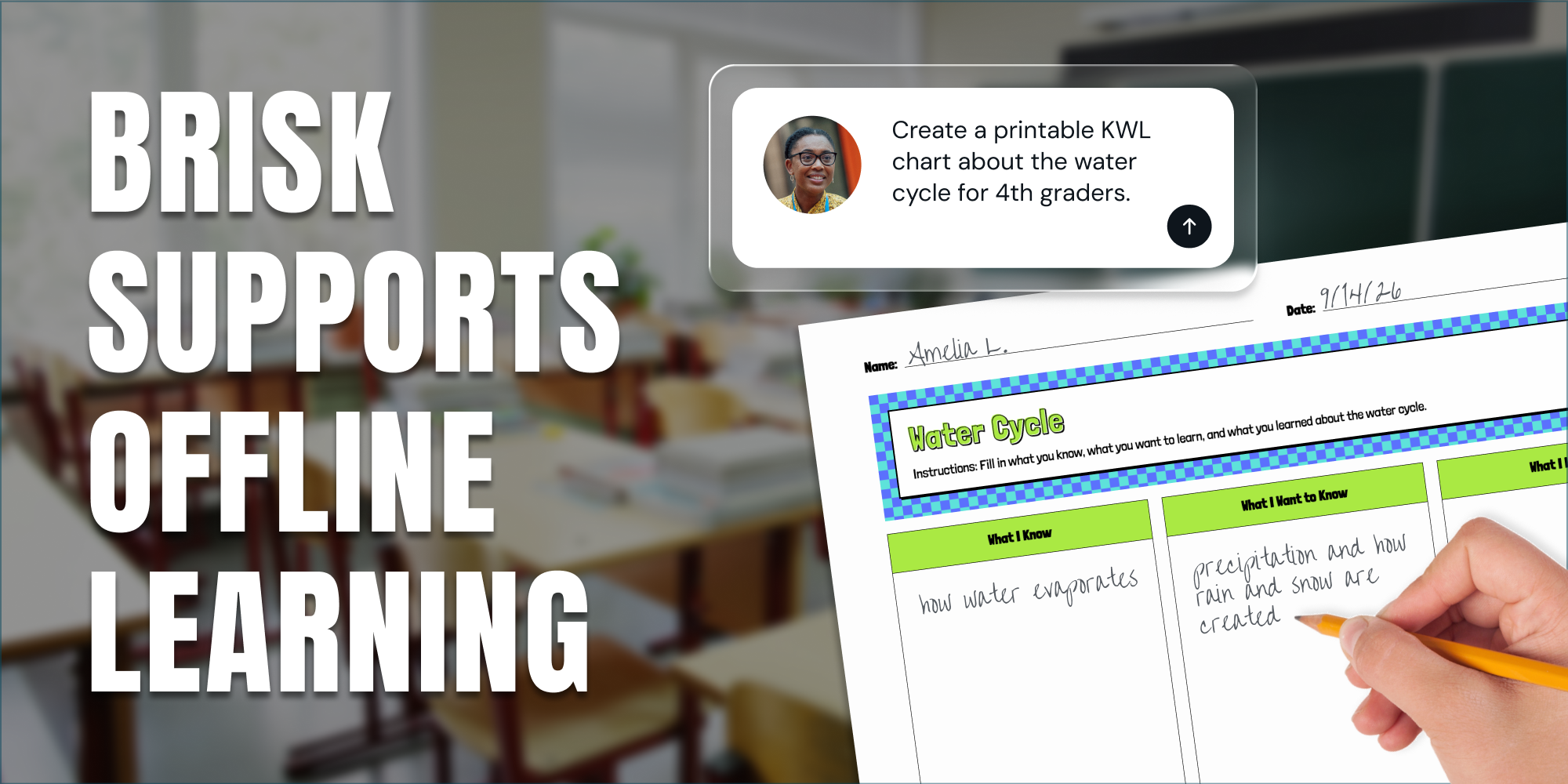
Each first day of school activity includes a Brisk prompt using our Create Anything tool to help you plan faster, personalize with ease, and meet every learner where they are. Here’s how to use them:
- Open Brisk in your Chrome browser.
- Search for “Create Anything.”
- Copy and paste the prompt from this post.
- Refine your request with Brisk, then generate your activity, resource, or discussion.
Don't have Brisk yet? It's free for teachers — sign up for Brisk today.
Whether you’re trying something new tomorrow or saving it for a future refresh, this list is here when you need it. Because what you do today sets the stage for what comes next.
First Day of School Activities by Grade Level
The same activity lands differently depending on who's in front of you, so here's where to start for each grade band. Every pick points to an activity already in this list.
- Elementary school: Keep directions short and visual and build in movement — the Would You Rather Movement Game (#2), Emoji Introductions (#3), and Chain of Kindness (#8), paired with a first-day read-aloud.
- Middle school: Protect social comfort with structured interaction — Find Someone Who… with a Twist (#1), Personality Playlist (#4), and the One-Word Wall (#16) let students share on their own terms.
- High school: respect their time with activities that have a clear payoff — "Dear Future Me" Letters (#20), Student TED Talks (#19), Silly Debates (#29), and Timeline of Me (#24) reveal something genuine without feeling juvenile.
Get-to-Know-You Games
Looking specifically for first day of school games? Start with the six below — these activities are quick, playful, and designed to help students feel seen without the spotlight being too bright. Whether it’s laughing over shared quirks or finding out who else puts hot sauce on everything, these ideas ease students into the room while helping you start learning who they are. Low pressure, high connection.
1. Find Someone Who... with a Twist
Each student receives a bingo-style sheet — but instead of generic traits, include quirky prompts like “loves pineapple on pizza” or “can make a weird animal noise.”
- Why it works: Students discover fun facts and unexpected common ground.
- Brisk prompt: Generate a playful “Find Someone Who” board with 25 unique, humorous, and culturally inclusive prompts for [insert grade level] students.
2. Would You Rather? Movement Game
Read off questions like “Would you rather teleport or time travel?” and students move to a side of the room to show their answer.
- Why it works: Builds comfort, encourages participation, and gets students moving.
- Brisk prompt: Create a list of 20 fun “Would You Rather” questions for [insert grade level] students.
3. Emoji Introductions
Students pick 3 emojis that represent them and explain why. Can be shared verbally, drawn, or written.
- Why it works: Invites self-expression in a digital-native language.
- Brisk prompt: Generate a prompt asking students to introduce themselves using only emojis and a brief explanation for [insert grade level] students.
4. Personality Playlist
Each student picks a song that represents their energy or personality. Play short clips and have classmates guess who picked what.
- Why it works: Fosters self-awareness and community through music.
- Brisk prompt: Generate a student-friendly prompt: “If your personality were a song, what would it be and why?”
5. Memory Match: Name + Fun Fact Edition
Pair students to share a fact, then remix into a memory game: “This is Max — he once ate a cricket!”
- Why it works: Makes names and stories stick through fun repetition.
- Brisk prompt: Create a guide for a memory-style name game with student facts for [insert grade level] students.
6. Icebreaker Skits
Students act out mini scenes that represent a favorite hobby, habit, or summer moment.
- Why it works: Adds movement, fun, and laughter to self-intros.
- Brisk prompt: Generate a list of silly skit prompts that students can act out in pairs or groups of three for [insert grade level] students.
Community + Belonging
Build a classroom culture where everyone matters. From day one, students are looking for signs that this is a space where they belong. These activities help co-create that space — one where every voice is valued, and students help shape the culture they’re part of. You’re not just setting expectations — you’re setting the tone for trust, respect, and ownership.
7. Community Vision Board
Create a shared collage (paper or digital) of images and words that represent your ideal classroom culture.
- Why it works: Visualizes collective values and sparks creativity.
- Brisk prompt: Generate a classroom vision board activity where students co-create a vision for their ideal classroom environment.
8. Chain of Kindness
Each student writes a kind message for a classmate and links their message on a paper chain that grows daily.
- Why it works: Fosters trust, kindness, and visibility.
- Brisk prompt: Generate sentence starters for student-to-student affirmations.
9. “We Are…” Identity Wall
Students each finish the phrase “We are…” with a word or phrase that reflects their background, values, or hopes.
- Why it works: Emphasizes collective identity and diversity.
- Brisk prompt: Create a reflective writing prompt that invites students to complete the phrase “We are…”
10. Culture Curators
Groups create mini exhibits (posters, slides, or videos) about their cultures, traditions, or favorite foods.
- Why it works: Promotes cultural awareness and student agency.
- Brisk prompt: Generate a template for a “Culture Curator” student presentation.
11. Respect Roundtable
Students write down what respect looks like, sounds like, and feels like — then turn it into class agreements.
- Why it works: Turns abstract values into real behaviors.
- Brisk prompt: Generate prompts that help students define respectful behavior in a classroom for [insert grade level] students.
12. Compliment Constellations
Each student draws their name at the center of a star and classmates write one-word compliments on rays radiating out.
- Why it works: Builds a visible map of positive traits and inclusion.
- Brisk prompt: Generate a guide for creating visual “Compliment Constellations” for [insert grade level] students.
Looking for more ways to foster classroom community? Check out our article 75 Ways to Build Classroom Community.
Creativity & Expression
Let students show who they are—beyond the surface. Your students aren’t just learners — they’re storytellers, artists, problem-solvers, and creators. These activities give them space to express their full selves while sparking imagination and joy. Bonus: you’ll quickly learn how they think, what excites them, and which learners light up when given creative freedom.
13. Design a Class Mascot
In teams, students invent a character that reflects their shared values and vibe.
- Why it works: Promotes collaboration, humor, and belonging.
- Brisk prompt: Generate a prompt asking students to create and pitch a class mascot.
14. “Me in a Bag” (Remixed)
Instead of bringing in items, students draw or digitally collage five objects that represent them.
- Why it works: Makes the activity more inclusive and creative.
- Brisk prompt: Create a visual storytelling prompt: “Design a digital ‘Me Bag’ that shares five things about you” for [insert grade level] students.
15. Dream Classroom Design
Students sketch or model a dream classroom — complete with features that support fun, focus, and learning.
- Why it works: Combines imagination with critical thinking.
- Brisk prompt: Generate a STEM-based design prompt for reimagining the perfect learning environment through a [insert grade level] student lens.
16. One-Word Wall
Each student selects a word that reflects their mindset or intention for the year.
- Why it works: Promotes introspection and builds a shared visual culture.
- Brisk prompt: Generate a reflection prompt to help students choose a meaningful “One Word” for the year.
17. Personal Coat of Arms
Design shields that highlight students’ values, strengths, and dreams.
- Why it works: Supports identity-building and artistic expression.
- Brisk prompt: Create a Coat of Arms template with guiding categories like “values,” “strength,” and “passion.”
18. Identity Maps
Students build webs showing different layers of who they are—family, interests, languages, and more.
- Why it works: Builds empathy and celebrates multidimensional identity.
- Brisk prompt: Generate identity map guiding questions that explore culture, community, and individuality.
Reflection & Leadership
Give students the mic — then get out of the way. The first day isn’t just about learning names — it’s a chance to hear students’ hopes, experiences, and ideas for the kind of classroom they want to build. These activities foster student voice, agency, and leadership, helping students feel not just included, but essential to how the year unfolds.
19. Student TED Talks
2-minute talks on topics students love, know, or wonder about.
- Why it works: Builds voice, courage, and confidence.
- Brisk prompt: Generate a student-friendly planning guide for a short TED Talk for [insert grade level] students.
20. “Dear Future Me” Letters
Students write letters to themselves to open at the end of the year.
- Why it works: Encourages goal-setting and emotional reflection.
- Brisk prompt: Create a guided “Dear Future Me” letter-writing template for [insert grade level] students.
21. Student-Led Icebreaker Stations
Small groups design and lead their own quick games.
- Why it works: Builds leadership and autonomy from day one.
- Brisk prompt: Generate a list of creative icebreaker ideas students could choose from to lead.
22. Class Norms Design Sprint
Teams draft and pitch classroom norms, then vote on which to adopt.
- Why it works: Makes expectations feel collaborative and democratic.
- Brisk prompt: Generate a lesson guide for co-creating classroom norms through student pitches.
23. Hope & Wonder Walk
Invite students to anonymously share their hopes and questions for the year ahead—what they’re excited for, curious about, or unsure of. Then, walk through the responses as a class to spot shared themes and offer encouragement.
- Why it works: This activity builds emotional safety and connection by helping students see they’re not alone in their thoughts.
- Brisk prompt: Generate sentence starters like: “This year, I hope to…” or “One thing I wonder about is…” for 6th grade students.
24. Timeline of Me
Students map key moments in their lives to reflect on growth and goals.
- Why it works: Brings awareness to identity and builds connection.
- Brisk prompt: Create a timeline activity that helps students map meaningful moments in their lives —highlighting personal growth, challenges overcome, and goals for the future. Include sentence stems like “A moment that shaped me was…” and “One goal I’m working toward is…”
Curiosity & Exploration
Start with wonder, stay curious together. What if the first day of school wasn’t just about routines, but about questions? These activities ignite student curiosity and open the door to discovery, showing learners that school is a place where their ideas matter and exploration is encouraged. Lead with wonder, and you’ll build momentum that lasts all year.
25. “What Do You Wonder?” Wall
Students write big, bold questions on sticky notes or digital boards.
- Why it works: Builds a culture of curiosity and inquiry.
- Brisk prompt: Generate a list of sample “I wonder…” starters across subject areas.
26. Me in Numbers Infographic
Students create an infographic using personal data: age, pets, screen time, books read, etc.
- Why it works: Combines data literacy and self-expression.
- Brisk prompt: Generate a prompt for a “Me in Numbers” data storytelling activity.
27. Book Tasting Café
Transform your classroom into a cozy café where students sample genres and share “flavor notes.”
- Why it works: Makes book choice feel fun and social.
- Brisk prompt: Generate a genre menu and reading reflection prompts for a book tasting for [insert grade level] students.
28. Curiosity Sparks
Use mystery items, images, or facts to spark discussion and theories.
- Why it works: Activates wonder and group problem-solving.
- Brisk prompt: Create a set of curiosity-driven mini-mysteries to use on day one for [insert grade level] students.
29. Silly Debates
Is cereal a soup? Should socks match? Students take sides and defend with logic.
- Why it works: Teaches respectful argumentation with a twist.
- Brisk prompt: Generate 10 lighthearted debate topics that are perfect for warm-up thinking for [insert grade level] students.
30. Invent an Icebreaker
Challenge students to invent, test, and refine their own icebreaker activity.
- Why it works: Puts creativity and student leadership at the center.
- Brisk prompt: Create a challenge prompt for students to design and lead their own original icebreaker for [insert grade level] students.
Keep It Going Through the First Week
Day one is a launch, not the whole mission — the first week is where routines actually stick. Thread one community-building activity through each of the first few days of the back-to-school season: practice a single routine on day two, introduce a low-stakes academic task on day three so students feel competent early, revisit your class agreements on day four, and close the week with a quick game or reflection on day five. For more, see our guides to icebreaker games and get-to-know-you questions for students.
What You Build Today Shapes What’s Next
The best classrooms aren’t built in a day, but they are built in moments like these. When students feel connected, challenged, and inspired, everything else gets easier. This list isn’t about checking a box or filling time; it’s about creating a space where students feel like they matter, and where learning actually feels worth it.
And with Brisk, you’re not just getting through the day. You’re planning with purpose, responding to real needs, and building toward something bigger — your next move, your next idea, your next level.
Whatever comes next, we’ve got you. Explore all Brisk Teaching Tools here, or start using Brisk for free today.