All Blog Posts

How Teacher Insight into AI Chats Supports Student Learning

Seeing Student Thinking Isn’t Optional — Here’s Why It Matters.

When teachers can see how students engage with AI, they can better guide learning, personalize support, and inspire deeper growth.

Lately, there’s been a growing debate in education about whether AI tools should give teachers visibility into student chats. Some general-use AI tools don’t offer visibility into student interactions. That might be fine for casual use, but in the classroom, it leaves teachers in the dark.

This isn’t just a feature decision, it’s a foundational choice that directly impacts instruction. When teachers can’t see how students engage with AI, they lose critical insight into how students think, where they’re struggling, and what kind of support they need.

At Brisk, we believe visibility isn’t a bonus feature, it’s a non-negotiable. Just like we’d never ask teachers to assess students without reading their work, we shouldn’t expect them to guide learning without seeing how students interact with AI.

And this isn’t about surveillance. It’s about staying connected to student thinking in a way that fosters clarity, creativity, and growth.

That’s why Brisk is built with teacher visibility at its core, helping educators stay in tune with student learning, without adding to their workload.

Brisk Makes Student Thinking Visible

When educators can see how students engage with AI, it unlocks powerful benefits:

Understand how students think

See how they approach a task, what they ask the AI, and where they get stuck or spark new ideas.

Identify learning needs faster

Use chat discussions to spot patterns: who needs scaffolding, who’s ready to go deeper, and who might benefit from a different kind of support.

Personalize instruction

With insight into student thinking, it’s easier to differentiate — whether that means checking in one-on-one, adjusting a lesson, or celebrating growth you wouldn’t have seen otherwise.

Brisk gives teachers a clearer view into student thinking, helping them respond with greater empathy, clarity, and support.

Much like reading a journal entry, reviewing a rough draft, or sitting in on a small-group conversation, Brisk gives teachers access to thinking in progress, and that’s where the richest learning happens.

And this is just the beginning.

We're building even more ways to help teachers stay connected to student thinking, without adding complexity or extra work.

What’s Coming: Brisk Next and Boost Insights

At ISTE 2025, we previewed two exciting features that expand how Brisk supports instructional clarity and student engagement — helping educators take their instruction to the next level.

Brisk Next

Brisk Next is a new platform experience that brings everything together, from trending topics and class performance to personalized instructional insights. It takes the data generated from your Brisk activities and transforms it into actionable recommendations for lessons, resources, and engaging student activities.

With Brisk Next, teachers can:

  • View real-time class insights and performance trends
  • Get personalized suggestions for materials aligned to class needs
  • Quickly access past feedback, submissions, and Brisk-generated content
  • Generate and share multiple resources at once — all from one place

Brisk Next makes it easier to stay responsive to student learning, without having to dig through data or switch between tools.
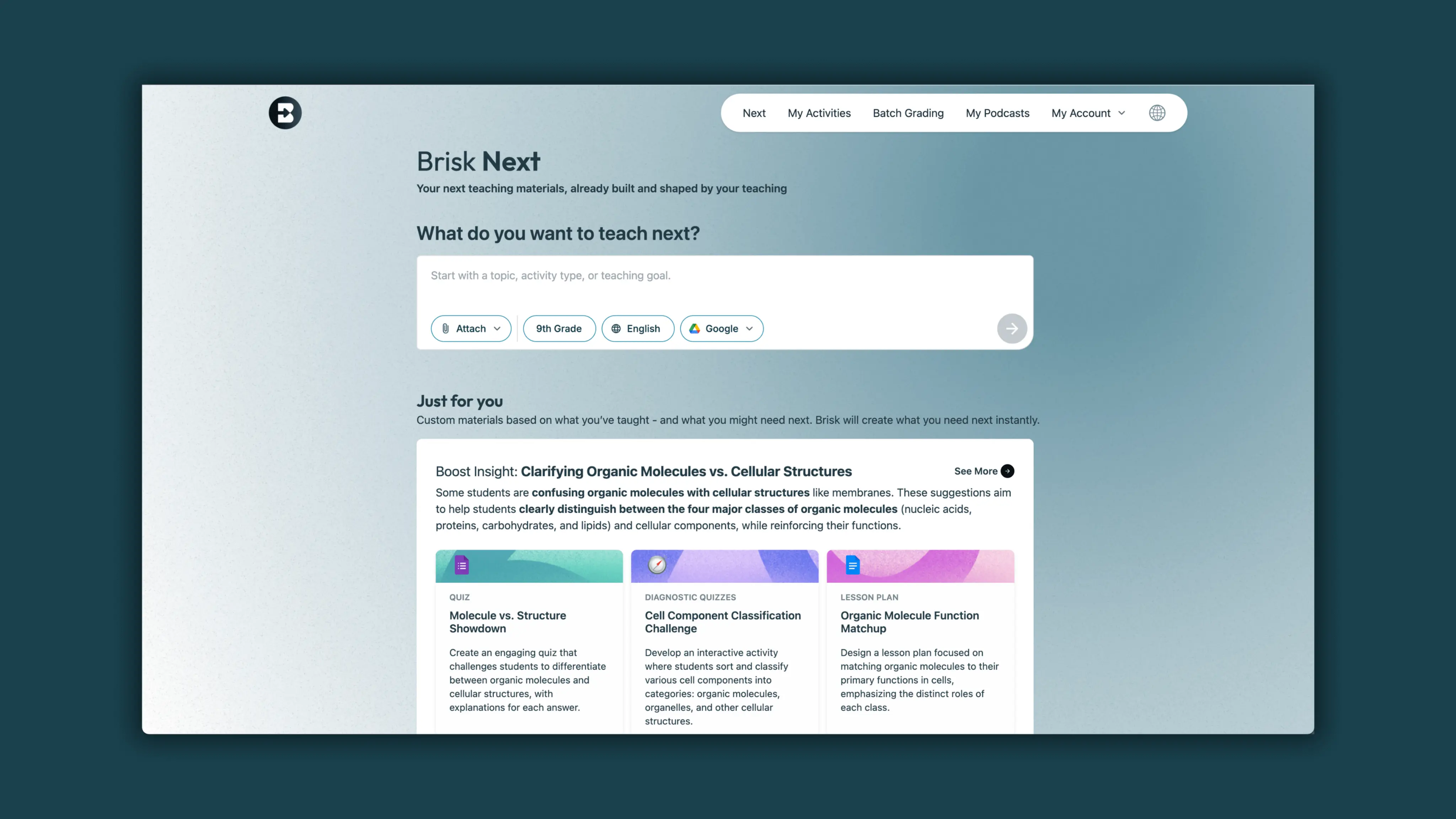
View of the Brisk Next dashboard

Boost Insights

Boost Insights is a built-in feature that gives teachers a clear, classwide snapshot of student progress — no guesswork required.

It’s designed for the reality of daily teaching. You don’t have time to check every single response, but you still need to know how students are doing. Boost Insights makes that easy by surfacing meaningful trends, strengths, and next steps as soon as you open a Boost activity.

With Boost Insights, teachers can:

  • Instantly see how many students have started, completed, or not yet engaged with the activity
  • View a breakdown by learning objective to see who’s meeting expectations and who may need support
  • Identify classwide strengths and areas for growth at a glance
  • Get real-time updates by simply refreshing the page

Whether you're planning your next lesson or checking in on student understanding, Boost Insights helps you act faster, with clarity and confidence.
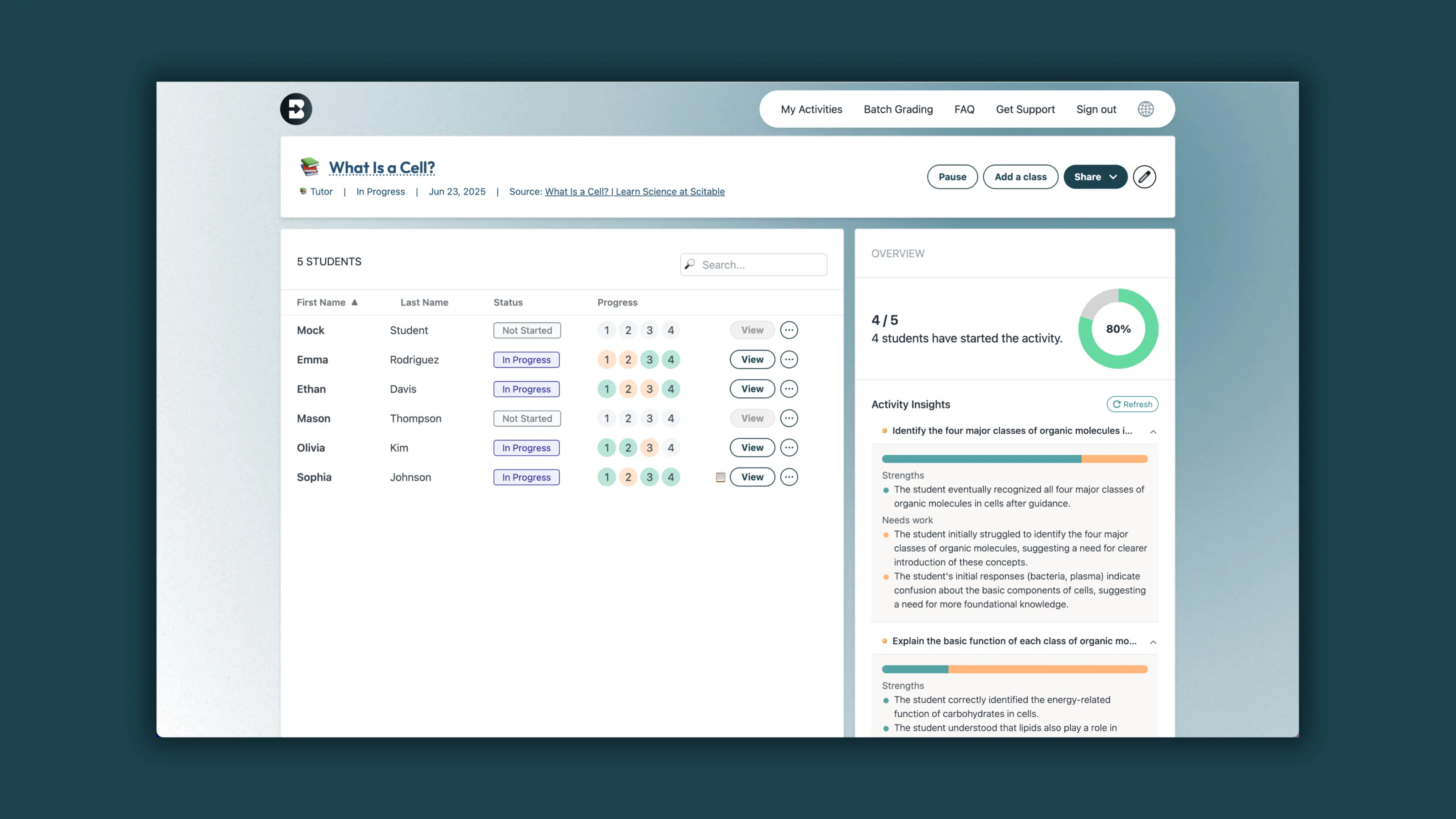
View of the Brisk Boost Insights dashboard

Built for Instructional Support, Not Oversight

Brisk puts instructional design in the hands of teachers and makes student thinking visible in a way that empowers reflection, feedback, and forward movement.

It’s not about monitoring. It’s about understanding how students learn, so teachers can meet them where they are and guide them forward.

As AI becomes more present in classrooms, tools that keep teachers connected to student thinking will matter more than ever.

Want to explore how Brisk keeps you connected to student thinking? Visit briskteaching.com to learn more and try it out.

Latest Posts

Latest from the Brisk Blog

Explore practical articles for K–12 educators, from classroom-ready strategies to thoughtful guidance on using AI in ways that support real teaching.

Library shelves filled with books
August 14, 2026
Thought Leadership

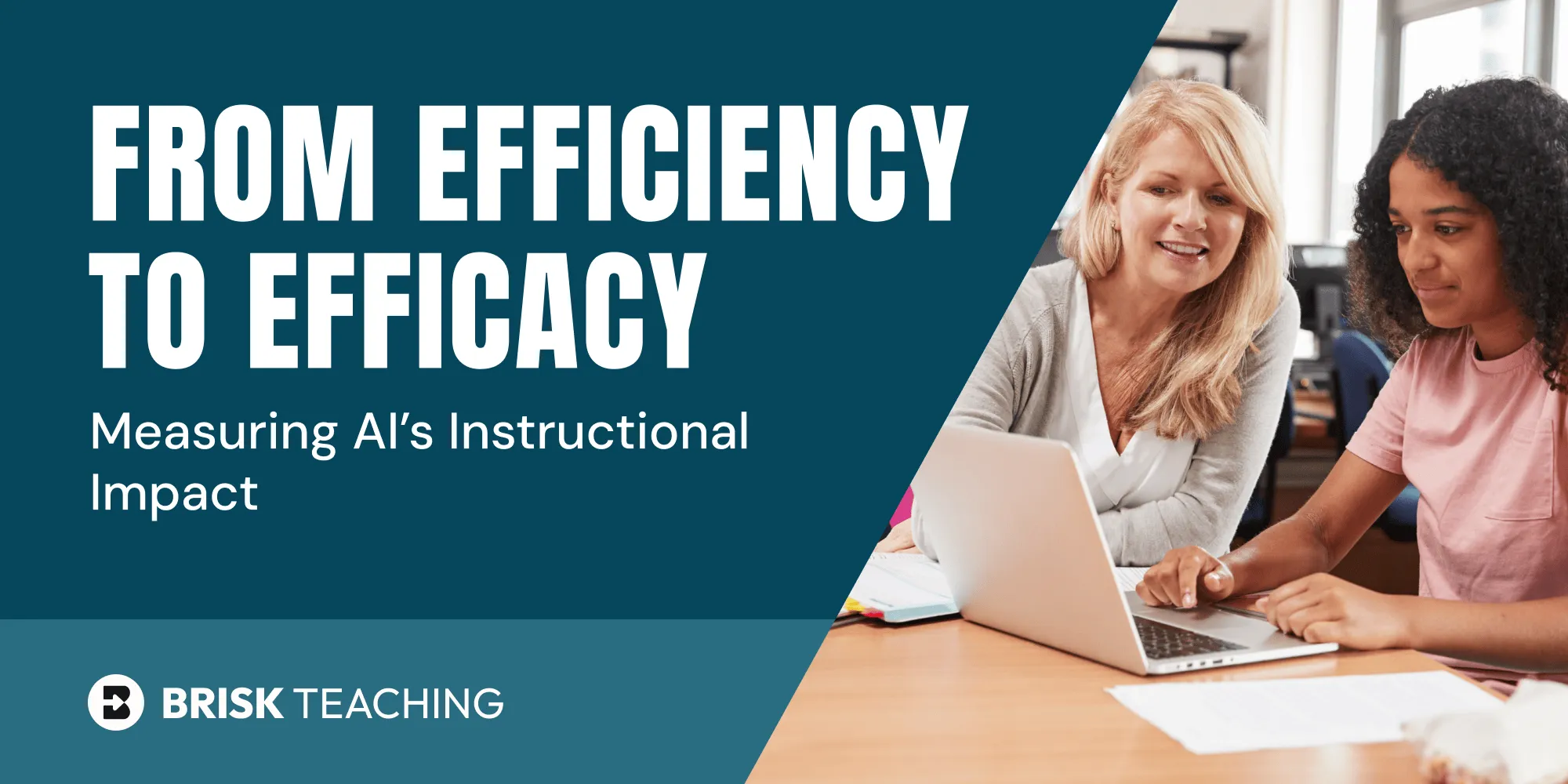
Brisk in New White Paper on AI's Instructional Impact

Brisk founder Arman Jaffer shares his key takeaways from Whiteboard Advisors’ new white paper on measuring the instructional impact of AI in the classroom.

AI is in the midst of a massive hype cycle. You know. I know it. Any person you stop on the street knows it. That doesn’t mean AI is all hype — far from it. It just means that, especially in a field like education, we shouldn’t treat every use of AI as equally valuable.

As with any tool, technology, or technique, our ability to scale the benefits of AI will hinge on how effectively we quantify AI-supported practices in the classroom. To that end, we recently commissioned a white paper from Whiteboard Advisors, “From Efficiency to Efficacy: Measuring AI’s Instructional Impact,” that explores a new way to approach this measurement.

The white paper details the need for a well-defined framework for connecting AI use to the learning science principles that research tells us drive student outcomes. It highlights the newest metric that school and district leaders will see in their Brisk dashboards this year, Quality Instructional Moments, as a strong example of how educators can draw these connections.

AI helps teachers do more of what they know works

There are decades upon decades of peer-reviewed research on the kinds of instructional practices that promote student achievement. The biggest obstacle to effective teaching isn’t knowing what to do, but finding the bandwidth to do it. As the white paper states:

We know that students learn better when they receive frequent, specific feedback rather than waiting weeks for a test grade. We know that students learn more when they’re working at the edge of their ability, challenged but not overwhelmed. And we know that the practices most likely to move students — responsive instruction, meaningful relationships, timely feedback and intervention — are also the ones most likely to get crowded out by everything else educators are asked to do.

Minimizing this “crowding out” is where AI has the greatest potential in education. AI isn’t a replacement for great teaching; it’s the infrastructure that makes it possible to implement proven practices with greater frequency, fidelity, and consistency.

Moving from higher productivity to increased teaching capacity

To reiterate: AI’s true value is not just that it enables teachers to do more, but that it enables them to do more of what really works.

Which is not to say that productivity and efficiency boosts are meaningless. For a long time, Brisk measured our impact in terms of hours saved on tasks like grading, resource writing, and administrative work. We all want to save time wherever we can — no harm in that. But as school and district leaders repeatedly asked, “How does Brisk actually support student learning?”, we realized we needed to take a more comprehensive view of what happens in the classroom.

What really matters is what teachers do with the time they save. When they reinvest the time in implementing proven instructional practices — differentiating instruction for every student, using data to drive decisions, intentional planning — that’s when student outcomes tend to improve.

Using Quality Instructional Moments as a leading indicator of learning

You might be wondering, “How do you track if and when any of this is happening?” It’s a good question.

Traditional success metrics like standardized test scores and graduation rates paint part of the picture, but they lag years behind the instructional actions that shaped them. In an effort to provide leaders with a leading indicator of effective instruction, we landed on Quality Instructional Moments.

As we define it, an instructional moment is a discrete, observable student interaction that:

  1. Is grounded in learning science;
  2. A teacher wouldn’t have been able to facilitate on a regular basis without the increased capacity carved out by AI.

Think: A teacher uses Brisk to provide every student with personalized, rubric-aligned feedback on the same day students turn in their essays. Or, a teacher uses Brisk to generate multiple versions of an activity to ensure each student’s assignments are challenging enough to promote growth but scaffolded enough to remain achievable.

These are the kinds of instructional moments that drive results. They’re also the kinds of moments that school and district leaders can now track in Brisk. (We get that every district has different priorities, so districts are able to customize how they measure instructional moments in Brisk based on their unique pedagogical approach.)

Get the full story

Whiteboard Advisors’ white paper does a great job of unpacking all the considerations that go into tracking AI’s impact in the classroom. It covers the entire spectrum of research-backed instructional practices that ground instructional moments, the five questions every district leader should ask when evaluating AI solutions, and a whole lot more.

It’s a quick and, for those of us who are interested in these things, incredibly compelling read. I’d encourage you to check it out.

– Arman Jaffer, Founder, Brisk Teaching

Library shelves filled with books
July 27, 2026
Tips for Teachers

60 Get-to-Know-You Questions for Students (For Every Grade)

60 get-to-know-you questions for students, organized by category and grade — plus, easy ways to use them for icebreakers, morning warm-ups, and first-day connection.

The first week of the school year sets the tone for the months of learning that follow. The fastest way to establish a classroom environment in which students feel comfortable talking, laughing, and taking productive risks together is to provide regular opportunities for students to build meaningful connections with each other.

A good set of get-to-know-you questions can do a lot of the heavy lifting here. These questions lower the temperature for nervous students, give quieter kids an easy on-ramp into discussions, and show you what kind of personalities you have in the room before you even start your first lesson.

Below are 60 get-to-know-you questions for students, sorted into categories you can pull from all year — not just on day one. (Skim to the grade-specific notes near the end for tips for getting the most out of these questions in your classroom.)

How to Use Get-to-Know-You Questions

While these questions are invaluable during the first week of school, they’re just as powerful in many other contexts throughout the year. In addition to using them as first-day icebreakers, always keep a few on hand for:

  • Morning (or class period) warm-ups: Pose one question a day (or every Monday) to get everyone’s juices flowing.
  • Exit tickets: Use a reflection question to keep students engaged during the final few minutes of class.
  • Digital or remote learning: Drop a question into a poll, a shared doc, or a discussion board so students can answer without the pressure of the spotlight. If you want a quick set of interactive questions tailored to your grade and subject, you can generate them with Brisk Boost, a student-facing, AI-supported workspace that puts you in control of what’s shared.

Regardless of when you’re using these get-to-know-you questions, make sure you keep these best practices in mind:

  • Keep it low stakes: Let students pass if a question doesn’t land for them, and answer the questions yourself so the sharing feels mutual.
  • Specify a format: Pick a response format that aligns with the energy in your classroom on the day, whether it’s a turn-and-talk with a partner, a quick go-around, a written response, or a digital poll.
  • Return to high-impact questions: Asking a question in September and then again in January is a great way to show students how much has changed over the course of a few months.

Icebreaker & First-Day Questions

These icebreaker questions for students invite short, low-stakes answers. Pair these with a few active icebreaker games to get everyone moving.

  1. What are you hoping this year will be like?
  2. What’s one word your friends would use to describe you?
  3. If we were going to pick a mascot for our class, what should it be?
  4. What’s something you’re looking forward to this year?
  5. What makes a classroom feel like a good place to be?
  6. What’s a fun fact about you that surprises people?
  7. What fictional world would you like to live in?
  8. What’s the farthest you’ve ever traveled from home?
  9. If you could switch places with anyone for a day, who would it be?
  10. What makes you feel welcome in a new group?

Fun & Favorites Questions

Easy, low-pressure questions are perfect for any time you need a quick warm-up.

  1. What’s something you’re really good at that most people don’t know about?
  2. If you had to eat only one meal for the rest of your life, what would it be?
  3. What’s the best movie or show you’ve watched recently?
  4. What song do you have on repeat right now?
  5. What’s your favorite way to spend a Saturday?
  6. If you could instantly master any skill, what would it be and why?
  7. What’s a book, game, or hobby you could talk about forever?
  8. What’s your go-to snack?
  9. What’s the best gift you’ve ever received?
  10. If you had a whole day with no plans, what would you do?

This-or-That & Would-You-Rather Questions

These this-or-that-questions for students promote whole-class participation. For a more active experience, let students respond with a hand gesture or by walking to one side of the room or the other.

  1. Summer or winter?
  2. Sweet or salty?
  3. Early bird or night owl?
  4. Books or movies?
  5. Mountains or beaches?
  6. Would you rather be able to fly or be invisible?
  7. Would you rather never have homework or never have a test again?
  8. Would you rather explore space or the deep ocean?
  9. Would you rather always be 10 minutes late or 20 minutes early?
  10. Would you rather have a rewind button or a pause button for your life?

Getting Comfortable Questions

A step past the icebreakers, these questions help students share a little more about themselves once the classroom has been established as a welcoming environment.

  1. Who’s someone you look up to, and why?
  2. What’s something you’ve worked hard to get better at?
  3. What’s a tradition your family or friends have?
  4. When do you do your best thinking?
  5. What’s a mistake that taught you something?
  6. What’s something that always makes you laugh?
  7. Where’s your favorite place to be?
  8. What’s a small thing that makes any day better?
  9. What have you been curious about lately?
  10. What’s something you’d love to spend more time doing?

Questions About Learning & School

These are the kinds of questions to ask students when you want insights you can incorporate directly into your teaching — how students learn, what helps them, and what gets in their way.

  1. What’s a subject or topic you genuinely enjoy?
  2. How do you like to work best: alone, in pairs, or in a group?
  3. What helps you focus when things get noisy or busy?
  4. What’s something a teacher has done that really helped you?
  5. When you’re stuck, what do you usually do first?
  6. What does a good day at school look like for you?
  7. What’s something you wish teachers understood about you?
  8. How do you like to get feedback on your work?
  9. What’s a goal you have for this year?
  10. What’s one thing that would make this class better for you?

Social-Emotional Learning Questions

Save these questions for later in the year, as they require a certain level of trust and familiarity among students.

  1. What does being a good friend mean to you?
  2. When was a time you felt really proud of yourself?
  3. How can you tell when someone’s having a hard day?
  4. What helps you calm down when you’re frustrated?
  5. What’s something kind someone did for you that you still remember?
  6. Who do you go to when you need help?
  7. What are you grateful for right now?
  8. What’s something you’d like to get better at as a classmate?
  9. What makes you feel respected?
  10. What inspires you?

Picking the Right Questions for Your Grade

  • Elementary school: Start with favorites and this-or-that questions. As you incorporate more complex questions, provide your answer first as a way to model what a complete response looks like. Movement voting — e.g., walking to the “sweet” side of the room or the “salty” side of the room — can help keep younger learners engaged.
  • Middle school: Make sure students are comfortable by using low-spotlight formats like written responses, anonymous polls, or partner shares before jumping into whole-class go-arounds. (Pro tip: Students at this age love debating would-you-rather questions.)
  • High school: Lean into the learning styles and SEL questions. Older students can handle real reflection, and they notice when you incorporate what they share into your teaching. Frame the conversations as “help me teach you well,” not just “share your feelings.”

Frequently Asked Questions

What makes for a good get-to-know-you question for students?

Early on in the school year, the best questions are specific, low stakes, and easy to answer in a sentence — favorites, would-you-rather choices, and light “tell me about yourself” prompts. Save deeper reflection questions for once you’ve built a positive classroom dynamic.

How do you use get-to-know-you questions in the classroom?

Use them as first-day icebreakers, daily warm-ups, exit tickets, or digital polls. Give students a clear format (partner talk, go-around, written response), let them pass, and answer each question yourself.

What questions can I ask to get to know my students better as learners?

Ask about what they enjoy learning, what helps them focus, and what they wish teachers understood. The answers will give you insights you can teach with, not just fun facts.

When should I use get-to-know-you questions?

The first week of school is the most obvious opportunity, but they’re just as useful after long breaks, when a new student joins your class, or any time you want to reset class energy.

Start the Year by Connecting with Your Students

You don’t need to step into the classroom on the first day of school and ask 60 get-to-know-you questions. In fact, you really shouldn’t — that might scare students a little.

Instead, pick five of your favorites for the first day, keep a few in your back pocket for slow moments, and work your way toward the deeper questions as trust develops. The questions may be simple, but the payoff can be huge: A class that knows each other, trusts you, and is ready to learn together.

Want to generate your own get-to-know-you questions in seconds? Use Brisk's Create Anything tool to generate a list of get-to-know-you questions tailored to your classroom needs in seconds. Free to use for teachers — get started with Brisk today.

Library shelves filled with books
July 20, 2026

30 Fun First-Day-of-School Activities [2026 Edition]

Kick off the year with 30 first day of school activities for elementary, middle, and high school — icebreakers, games, and get-to-know-you ideas, each with a Brisk prompt to get you started.

Set the Tone for the New School Year

While these activities are perfect for back-to-school season, they’re just as powerful anytime you want to build connection, spark curiosity, or shift the energy in your classroom. Whether you’re kicking things off with a new group, regrouping mid-semester, or hitting reset after a tough week, these ideas help you reconnect, recharge, and refocus — no matter the date on the calendar.

Students thrive when they feel safe, valued, and inspired. And that kind of classroom doesn’t just happen. It’s built in the small, intentional moments — where students get to reflect, laugh, lead, and learn with each other. That’s what these activities are designed for.

From creative icebreakers and curiosity sparks to reflection prompts and student-led challenges, this collection helps you create a space where students feel like they belong — and where learning feels meaningful, not mandatory.

Each activity includes a Brisk prompt to help you plan faster, personalize with ease, and meet every learner where they are. Here’s how to use them:

  1. Open Brisk in your Chrome browser.

  2. Click “Create Anything.”

  3. Copy and paste the prompt from this post.

  4. Customize it if needed, then generate your activity, resource, or discussion.

Whether you’re trying something new tomorrow or saving it for a future refresh, this list is here when you need it. 


Because what you do today sets the stage for what comes next.

Get-to-Know-You Games

Break the ice without the awkwardness.
These activities are designed to help students feel seen without the spotlight being too bright. Whether it’s laughing over shared quirks or finding out who else puts hot sauce on everything, these ideas ease students into the room while helping you start learning who they are. Low pressure, high connection.

1. Find Someone Who... with a Twist
Each student receives a bingo-style sheet — but instead of generic traits, include quirky prompts like “loves pineapple on pizza” or “can make a weird animal noise.”

  • Why it works: Students discover fun facts and unexpected common ground. 
  • Brisk prompt: Generate a playful “Find Someone Who” board with 25 unique, humorous, and culturally inclusive prompts for [insert grade level] students.

2. Would You Rather? Movement Game
Read off questions like “Would you rather teleport or time travel?” and students move to a side of the room to show their answer.

  • Why it works: Builds comfort, encourages participation, and gets students moving.
  • Brisk prompt: Create a list of 20 fun “Would You Rather” questions for [insert grade level] students.

3. Emoji Introductions
Students pick 3 emojis that represent them and explain why. Can be shared verbally, drawn, or written.

  • Why it works: Invites self-expression in a digital-native language.
  • Brisk prompt: Generate a prompt asking students to introduce themselves using only emojis and a brief explanation for [insert grade level] students. 

4. Personality Playlist
Each student picks a song that represents their energy or personality. Play short clips and have classmates guess who picked what.

  • Why it works: Fosters self-awareness and community through music.
  • Brisk prompt: Generate a student-friendly prompt: “If your personality were a song, what would it be and why?”

5. Memory Match: Name + Fun Fact Edition
Pair students to share a fact, then remix into a memory game: “This is Max — he once ate a cricket!”
 

  • Why it works: Makes names and stories stick through fun repetition.
  • Brisk prompt: Create a guide for a memory-style name game with student facts for [insert grade level] students.

6. Icebreaker Skits
Students act out mini scenes that represent a favorite hobby, habit, or summer moment.

  • Why it works: Adds movement, fun, and laughter to self-intros.
  •  Brisk prompt: Generate a list of silly skit prompts that students can act out in pairs or groups of three for [insert grade level] students.

Community + Belonging

Build a classroom culture where everyone matters.

From day one, students are looking for signs that this is a space where they belong. These activities help co-create that space — one where every voice is valued, and students help shape the culture they’re part of. You’re not just setting expectations — you’re setting the tone for trust, respect, and ownership.

7. Community Vision Board
Create a shared collage (paper or digital) of images and words that represent your ideal classroom culture.

  • Why it works: Visualizes collective values and sparks creativity.
  • Brisk prompt: Generate a classroom vision board activity where students co-create a vision for their ideal classroom environment.

8. Chain of Kindness
Each student writes a kind message for a classmate and links their message on a paper chain that grows daily.

  • Why it works: Fosters trust, kindness, and visibility.
  •  Brisk prompt: Generate sentence starters for student-to-student affirmations.

9. “We Are…” Identity Wall
Students each finish the phrase “We are…” with a word or phrase that reflects their background, values, or hopes.

  • Why it works: Emphasizes collective identity and diversity.
  • Brisk prompt: Create a reflective writing prompt that invites students to complete the phrase “We are…”

10. Culture Curators
Groups create mini exhibits (posters, slides, or videos) about their cultures, traditions, or favorite foods.

  • Why it works: Promotes cultural awareness and student agency.
  • Brisk prompt: Generate a template for a “Culture Curator” student presentation.

11. Respect Roundtable
Students write down what respect looks like, sounds like, and feels like — then turn it into class agreements.

  •  Why it works: Turns abstract values into real behaviors.
  •  Brisk prompt: Generate prompts that help students define respectful behavior in a classroom for [insert grade level] students.

12. Compliment Constellations
Each student draws their name at the center of a star and classmates write one-word compliments on rays radiating out.

  • Why it works: Builds a visible map of positive traits and inclusion. 
  • Brisk prompt: Generate a guide for creating visual “Compliment Constellations” for [insert grade level] students.

Looking for more ways to foster classroom community? Check out 75 Ways to Build Classroom Community  

Creativity & Expression

Let students show who they are—beyond the surface.
Your students aren’t just learners — they’re storytellers, artists, problem-solvers, and creators. These activities give them space to express their full selves while sparking imagination and joy. Bonus: you’ll quickly learn how they think, what excites them, and which learners light up when given creative freedom.

13. Design a Class Mascot
In teams, students invent a character that reflects their shared values and vibe.

  • Why it works: Promotes collaboration, humor, and belonging. 
  • Brisk prompt: Generate a prompt asking students to create and pitch a class mascot.

14. “Me in a Bag” (Remixed)
Instead of bringing in items, students draw or digitally collage five objects that represent them.

  • Why it works: Makes the activity more inclusive and creative.
  • Brisk prompt: Create a visual storytelling prompt: “Design a digital ‘Me Bag’ that shares five things about you” for [insert grade level] students.

15. Dream Classroom Design
Students sketch or model a dream classroom — complete with features that support fun, focus, and learning.

  •  Why it works: Combines imagination with critical thinking.
  •  Brisk prompt: Generate a STEM-based design prompt for reimagining the perfect learning environment through a [insert grade level] student lens.

16. One-Word Wall
Each student selects a word that reflects their mindset or intention for the year.

  • Why it works: Promotes introspection and builds a shared visual culture.
  •  Brisk prompt: Generate a reflection prompt to help students choose a meaningful “One Word” for the year.

17. Personal Coat of Arms
Design shields that highlight students’ values, strengths, and dreams.

  •  Why it works: Supports identity-building and artistic expression.
  •  Brisk prompt: Create a Coat of Arms template with guiding categories like “values,” “strength,” and “passion.”

18. Identity Maps
Students build webs showing different layers of who they are—family, interests, languages, and more.

  • Why it works: Builds empathy and celebrates multidimensional identity.
  • Brisk prompt: Generate identity map guiding questions that explore culture, community, and individuality.

Reflection & Leadership

Give students the mic — then get out of the way.
The first day isn’t just about learning names — it’s a chance to hear students’ hopes, experiences, and ideas for the kind of classroom they want to build. These activities foster student voice, agency, and leadership, helping students feel not just included, but essential to how the year unfolds.

19. Student TED Talks
2-minute talks on topics students love, know, or wonder about.

  • Why it works: Builds voice, courage, and confidence.
  • Brisk prompt: Generate a student-friendly planning guide for a short TED Talk for [insert grade level] students.

20. “Dear Future Me” Letters
Students write letters to themselves to open at the end of the year.

  • Why it works: Encourages goal-setting and emotional reflection.
  •  Brisk prompt: Create a guided “Dear Future Me” letter-writing template for [insert grade level] students. 

21. Student-Led Icebreaker Stations
Small groups design and lead their own quick games.

  • Why it works: Builds leadership and autonomy from day one.
  • Brisk prompt: Generate a list of creative icebreaker ideas students could choose from to lead.

22. Class Norms Design Sprint
Teams draft and pitch classroom norms, then vote on which to adopt.

  • Why it works: Makes expectations feel collaborative and democratic.
  • Brisk prompt: Generate a lesson guide for co-creating classroom norms through student pitches.

23. Hope & Wonder Walk

Invite students to anonymously share their hopes and questions for the year ahead—what they’re excited for, curious about, or unsure of. Then, walk through the responses as a class to spot shared themes and offer encouragement.

  • Why it works: This activity builds emotional safety and connection by helping students see they’re not alone in their thoughts.
  • Brisk prompt: Generate sentence starters like: “This year, I hope to…” or “One thing I wonder about is…” for 6th grade students. 

24. Timeline of Me
Students map key moments in their lives to reflect on growth and goals.

  • Why it works: Brings awareness to identity and builds connection.
  • Brisk prompt: Create a timeline activity that helps students map meaningful moments in their lives—highlighting personal growth, challenges overcome, and goals for the future. Include sentence stems like “A moment that shaped me was…” and “One goal I’m working toward is…”

Curiosity & Exploration

Start with wonder. Stay curious together.

What if the first day of school wasn’t just about routines—but about questions? These activities ignite student curiosity and open the door to discovery, showing learners that school is a place where their ideas matter and exploration is encouraged. Lead with wonder, and you’ll build momentum that lasts all year.

25. “What Do You Wonder?” Wall
Students write big, bold questions on sticky notes or digital boards.

  • Why it works: Builds a culture of curiosity and inquiry.
  • Brisk prompt: Generate a list of sample “I wonder…” starters across subject areas.

26. Me in Numbers Infographic
Students create an infographic using personal data: age, pets, screen time, books read, etc.

  • Why it works: Combines data literacy and self-expression.
  • Brisk prompt: Generate a prompt for a “Me in Numbers” data storytelling activity.

27. Book Tasting Café
Transform your classroom into a cozy café where students sample genres and share “flavor notes.”

  • Why it works: Makes book choice feel fun and social. 
  • Brisk prompt: Generate a genre menu and reading reflection prompts for a book tasting for [insert grade level] students. 

28. Curiosity Sparks
Use mystery items, images, or facts to spark discussion and theories.

  • Why it works: Activates wonder and group problem-solving. 
  • Brisk prompt: Create a set of curiosity-driven mini-mysteries to use on day one for [insert grade level] students. 

29. Silly Debates
Is cereal a soup? Should socks match? Students take sides and defend with logic.

  • Why it works: Teaches respectful argumentation with a twist.
  • Brisk prompt: Generate 10 lighthearted debate topics that are perfect for warm-up thinking for [insert grade level] students. 

30. Invent an Icebreaker
Challenge students to invent, test, and refine their own icebreaker activity.

  • Why it works: Puts creativity and student leadership at the center.
  • Brisk prompt: Create a challenge prompt for students to design and lead their own original icebreaker for [insert grade level] students. 

What You Build Today Shapes What’s Next

The best classrooms aren’t built in a day — but they are built in moments like these. When students feel connected, challenged, and inspired, everything else gets easier.

This list isn’t about checking a box or filling time — it’s about creating a space where students feel like they matter, and where learning actually feels worth it.

And with Brisk, you’re not just getting through the day. You’re planning with purpose, responding to real needs, and building toward something bigger — your next move, your next idea, your next level.

Whatever comes next, we’ve got you.

Explore all Brisk Teaching Tools here.

Library shelves filled with books
8
min
Brisk Features

브리스크 티칭 AI는 안전한가요?알아야 할 모든 것

“브리스크 티칭 AI는 안전한가요?” 라고 궁금하신가요?Brisk Teating은 안전하고 신뢰할 수 있으며 교육자와 학생을 위한 최고의 AI 기반 도구 중 하나입니다.강의실을 어떻게 변화시킬 수 있는지 알아보세요!

솔직히 말해서, 'AI 기반 도구'라는 말을 듣는 순간, 새 스니커즈가 필요하다는 것을 알면서 넷플릭스 제안부터 휴대폰에 이르기까지 모든 것이 소름 끼치게 떠오를 것입니다.따라서 교사로서 궁금해하는 것은 당연합니다. Brisk Teaching AI는 안전한가요?Google 문서부터 수업 계획까지 모든 것이 인공 지능을 기반으로 하는 세상에서는 강의실에 도입하는 기술이 최고 수준인지 확인해야 합니다.스포일러 경고: Brisk Teaching AI는 안전할 뿐만 아니라 학생의 학습을 강화하는 데 사용할 수 있는 가장 강력한 강의실 도구 중 하나이기도 합니다.Brisk가 교육 효과를 높일 수 있는 방법과 Brisk가 K-12 교육 기술 분야의 선도적인 AI 기반 Chrome 확장 프로그램인 이유는 다음과 같습니다.

교실에서의 AI의 힘

상상해 보세요. 학교 수업 중반이에요.Google 클래스룸 탭이 열려 있고, 수업 목표가 반쯤 완료되었으며, 관리 업무가 처리할 수 있는 속도보다 훨씬 빠르게 쌓여 있습니다.지금까지 본 것 중 가장 날카로운 연필처럼 혼란스러운 상황을 헤쳐나갈 수 있는 AI 기반 활동인 Brisk Teaching AI가 여러분을 지원합니다.글쓰기 학생에게 점수를 매기든 Google Workspace에서 슬라이드 프레젠테이션을 만들든, Brisk는 모든 것을 간소화하여 귀중한 시간을 절약해 줍니다.또한 Brisk Chrome 확장 프로그램은 완전히 무료이므로 예산이 한정된 평범한 K-12 교육자에게도 안성맞춤입니다.

브리스크 티칭 AI는 안전한가요?

안전은 모든 교실, 특히 신기술의 경우 큰 관심사입니다.그렇다면 브리스크 티칭 AI는 안전할까요?정답은 '예'입니다.Brisk는 학생 개인 정보 보호 및 데이터 보안에 대한 명성을 쌓아왔습니다. 소름 끼치는 AI는 없습니다. 단지 친절한 AI 기반 튜터로 학생들이 학습 과정을 개선하도록 도와줄 뿐입니다.

  • 학생 데이터 보호: Brisk는 학습 경험을 개인화하는 데 필요한 데이터만 수집합니다.개인 데이터를 불필요하게 비축하는 일은 없습니다.
  • 원활한 통합: Google 문서, Google 설문지, Google 슬라이드와 같은 친숙한 도구와 함께 작동하므로 여기서는 가파른 학습 과정이 필요 없습니다.이미 이러한 플랫폼을 사용하고 계실 것입니다. Brisk는 플랫폼을 더 좋게 만들어 줄 뿐입니다.
  • 학교용으로 제작: Brisk는 교육구를 위해 특별히 설계되었으며 교육 환경에서의 안전을 보장하는 맞춤형 기능을 갖추고 있습니다.


“브리스크 티칭 AI는 안전한가요?” 라고 대답할 때개인 정보 보호, 보안 및 교사 친화적인 사용을 위해 필요한 모든 것을 갖추고 있으니 안심하셔도 됩니다.

Brisk 티칭 AI가 학생을 위한 최고의 AI인 이유는 무엇일까요?

“물론 Brisk는 안전하지만 실제로 유용할까요?” 라고 생각할 수도 있습니다.오, 맞아요.Brisk Teaching AI는 철자 오류를 자동 교정하는 기본 AI 플랫폼보다 훨씬 더 많은 것을 제공합니다.실시간 피드백 기능을 갖춘 Brisk는 학생들을 위한 개인 튜터 역할을 하며 모든 학년 수준에 대한 즉각적인 지원과 맞춤형 도움을 제공합니다.눈에 띄는 점은 다음과 같습니다.

학생 글쓰기에 대한 실시간 피드백

Brisk는 5학년 문장 구조부터 대학 수준의 연구 논문에 이르기까지 모든 것에 대한 즉각적인 피드백을 제공합니다.이는 문법, 문장 흐름, 심지어는 고급 작문 기법의 개선을 제안하며, ELA 교사들의 판도를 완전히 바꿔놓을 것입니다.

적응형 퀴즈 및 수학 도움말

Brisk는 글쓰기뿐만 아니라 적응형 퀴즈를 만들고 복잡한 수학 문제를 이해하기 쉬운 방식으로 분류하는 데에도 탁월합니다.이제 대수를 어려워하는 학생들이 멍하니 쳐다볼 필요가 없습니다. Brisk가 대수를 단계별로 안내해 줍니다.

인터랙티브 브레인스토밍 세션

창의력을 발휘하고 싶으신가요?Brisk는 인터랙티브 브레인스토밍 세션을 진행하여 학생들이 프로젝트, 에세이 또는 캐릭터 채팅을 위한 참신한 아이디어를 생각해낼 수 있도록 도와줍니다.

스트레스 없는 스터디 세션

Brisk는 시험을 준비하는 학생들을 위해 연습 문제, 맞춤형 학습 세트 및 개인화된 루브릭을 생성할 수 있습니다.대면 수업을 듣든 원격 학습을 하든 Brisk는 스트레스 없는 복습 세션을 보장합니다.

교사들이 Brisk 티칭 AI를 좋아하는 이유

Brisk Teaching AI는 무료이기 때문에 인기가 있는 것만은 아닙니다.교사와 학생에게 진정으로 도움이 되기 때문에 많은 사랑을 받고 있습니다.지루한 작업에 소요되는 시간을 줄이는 것부터 수업의 효율성을 높이는 것까지, Brisk는 하루 중 시간을 절약해 줍니다.그게 전부가 아닙니다.

  • 직관적인 도구: 기술에 정통하지 않은 교사도 쉽게 사용할 수 있습니다.Brisk Chrome 확장 프로그램은 기존 워크플로우에 딱 맞습니다.
  • 맞춤형 기능: Brisk는 다양한 읽기 수준으로 작업하든 새로운 학생을 위해 수업 계획을 수정하든 관계없이 학생의 고유한 요구에 맞게 조정됩니다.
  • 참여 활동: Brisk는 AI 기반 튜터와 활동을 통해 학생 참여도를 높이고 보다 역동적인 학습 환경을 보장합니다.

Brisk 교육 AI: 현대 교실을 위한 강력한 도구

세분화된 커리큘럼 생태계에서 Brisk Teaching AI는 교사와 학생들이 시간을 최대한 활용할 수 있도록 돕는 글로벌 리더로 두각을 나타내고 있습니다.Owl Ventures 및 South Park Commons와 같은 투자자들의 지원을 통해 Brisk는 단순히 지나가는 트렌드가 아니라 우리가 가르치는 방식을 혁신하기 위해 존재한다는 것이 분명해졌습니다.따라서 개인 튜터를 찾고 있든, 학생 피드백을 간소화할 방법을 찾고 있든, 지루한 채점 작업을 도와줄 방법을 찾고 있든 Brisk Teaching AI가 도와드릴 수 있습니다.

“브리스크 티칭 AI는 안전한가요?” 라고 물으셨다면이제 답을 알 수 있습니다.Brisk는 안전하고 신뢰할 수 있으며 교육용 무기고에 통합할 수 있는 완벽한 새 도구입니다.최첨단 AI 기능과 이미 사용 중인 도구와의 원활한 통합을 통해 이제 Brisk가 교실을 어떻게 변화시킬 수 있는지 알아볼 차례입니다.

Library shelves filled with books
8
min
Tips for Teachers

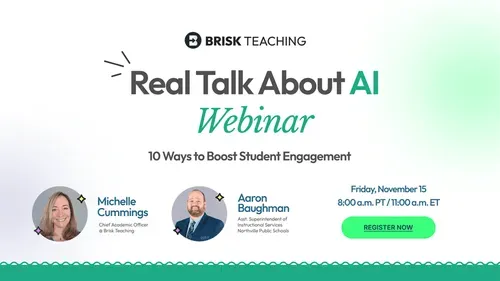
Brisk and Boost를 통해 학생 참여도를 높이는 10가지 방법을 알아보세요

최근의 Real Talk About AI 웨비나에서는 노스빌 공립학교의 교육자들과 함께 Brisk and Boost를 사용하여 학생 참여를 강화하기 위한 획기적인 전략을 살펴보았습니다.학생들은 AI 기반 피드백 활용부터 국화와의 캐릭터 채팅 제작, 맞춤형 진로 탐구에 이르기까지 놀라운 대화형 학습 경험을 공유했습니다. 이 세션은 학생들의 참여를 한 단계 끌어올렸습니다.

웨비나 하이라이트: 혁신적인 도구를 통한 학생 참여 유도

웨비나에서는 학생 참여도를 높이기 위한 10가지 효과적인 전략에 대해 논의했습니다.

1.학생 글쓰기에 대한 피드백: 피드백 프로세스를 자동화하고 개선하여 학생의 글쓰기를 향상시키는 상세하고 개인화된 의견을 제공합니다.

2.글쓰기 검사: 학생의 글쓰기 과정을 재생하여 맞춤형 코칭과 통찰력을 제공하십시오.

3.유튜브 엑시트 티켓: 학생들의 참여도와 책임감을 유지하는 대화형 기능을 통해 학생들에게 역사 동영상을 제공하고 수동적 시청을 능동적 학습으로 전환하세요.

4.핫 토픽 토론: 학생들이 학습에서 숙제의 역할과 같은 관련 문제에 대해 Boost의 챗봇과 구조화된 토론을 할 수 있도록 기사를 보강하여 비판적 사고와 논증을 촉진합니다.

5.캐릭터 채팅: 학생들이 정원에서 사랑하는 인물, 역사적 인물 또는 나비와 상호 작용할 수 있도록 하여 문학, 과학 및 역사에 생명을 불어넣으세요.

6.온라인 커리큘럼 튜터: AI 기반 튜터링 세션을 위해 채택한 커리큘럼을 학생들에게 제공하세요.

7.아트 프로젝트 브레인스토밍: Boost는 학생들이 Shoe Designs Inspired by Candy와 같은 다음 예술 프로젝트를 브레인스토밍할 수 있도록 도와줍니다.학제 간 프로젝트는 창의성과 자기 표현을 장려합니다.

8.다국어 학습자 지원: 세계 언어를 선택하면 Boost가 해당 언어로 학생들과 튜터링, 토론, 브레인스토밍 또는 채팅을 진행합니다.기사, 커리큘럼 또는 리소스를 원활하게 번역하여 다국어 학생을 위한 수업을 조정하세요.

9.커리어 탐색: 맞춤형 진로 설문지를 통해 학습 차이가 있는 학생들에게 스캐폴드 지원을 제공합니다.학생들은 Boost의 AI 챗봇이 지원하는 Google 양식을 작성합니다.

10.사회적 기술 개발: 일부 학생들은 사회적 기술 개발과 대화 유지에 도움이 필요합니다.AI 기반 채팅 경험을 향상시키기 위해 상호 상호 작용 템플릿을 사용하여 스캐폴드 방식의 연습을 많이 해보는 건 어떨까요?

웨비나 보기 자세히 알아보려면

노스빌 공립학교의 교육자들은 Brisk와 Boost가 어떻게 혁신적인 교수법을 현실로 가져오는지 보여주는 영감을 주는 실제 사례를 공유했습니다.피드백 프로세스를 개선하든, 몰입도 높은 캐릭터 채팅을 만들든, 우리의 도구는 교사의 시간을 절약하고 학생 참여도를 높일 수 있도록 설계되었습니다.Brisk and Boost는 교수법과 학습을 더욱 효과적이고 재미있게 만들어 줍니다!

여기에서 전체 웨비나를 시청하세요. 강의실에서 이러한 전략을 구현하는 방법에 대한 포괄적인 개요와 실용적인 통찰력을 제공합니다.

`

READY TO BRING BRISK TO YOUR DISTRICT?

See how 20,000+ districts adopted AI with full compliance and teacher buy-in from day one.