

AI Literacy for Students... Made Brisk
You don’t need to be a tech wizard to teach AI literacy — you just need the right tools (and maybe that second cup of coffee). Brisk makes it easy to bring AI to life in your classroom without the stress.

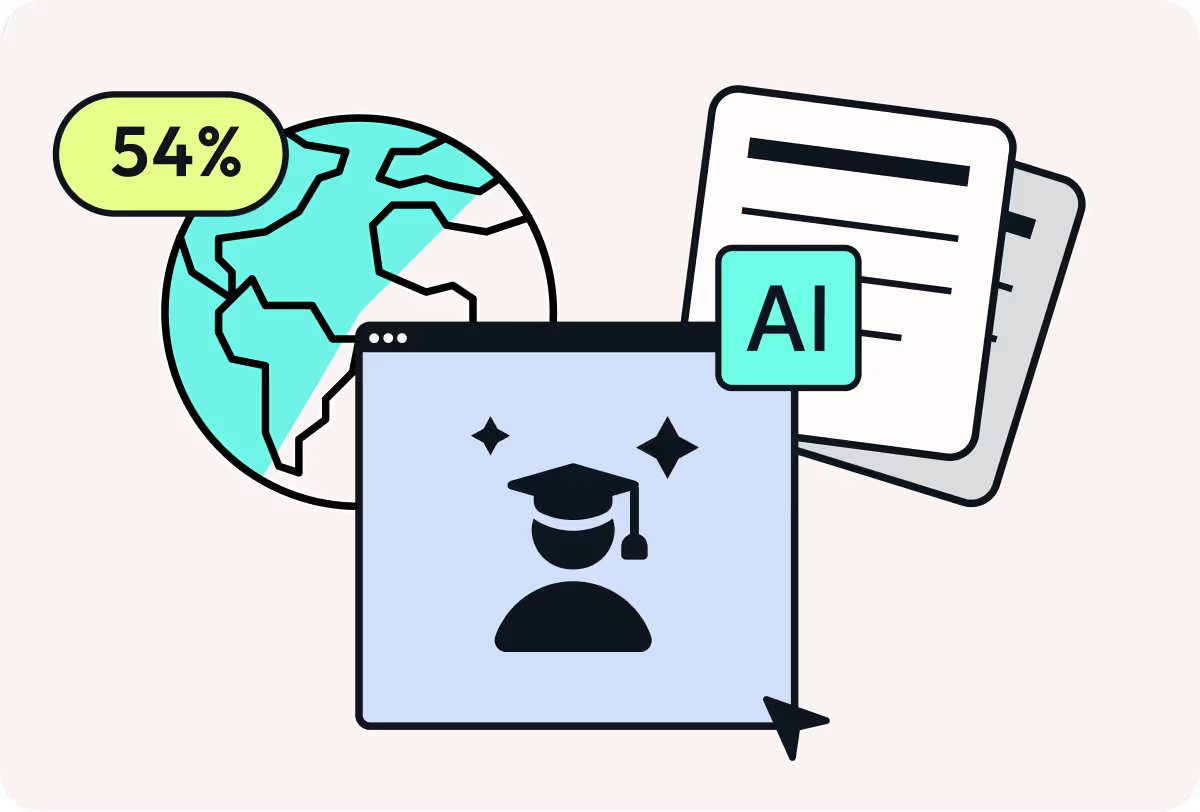
Here’s the thing: AI isn’t some “future” thing — it’s already here, shaping how we work, live, and even how students learn.
In fact, 54% of students globally are already using AI in their studies, and over half use it weekly, according to the Digital Education Council.
Teaching AI literacy isn’t just about understanding the tech — it’s about giving students the skills to thrive in a world driven by innovation and creativity. And with Brisk, it’s not only simple, but dare we say, actually fun?
We’re here to help you empower the next generation to think critically, engage ethically, and lead confidently in an AI-driven world.
What is AI literacy?
AI literacy is basically teaching students to get AI. It’s about understanding how it works, using it responsibly, and (most importantly) making sure it doesn’t turn into the villain in their sci-fi daydreams.
Think of it as teaching them how to handle the tech of tomorrow like pros — ethically, critically, and confidently.
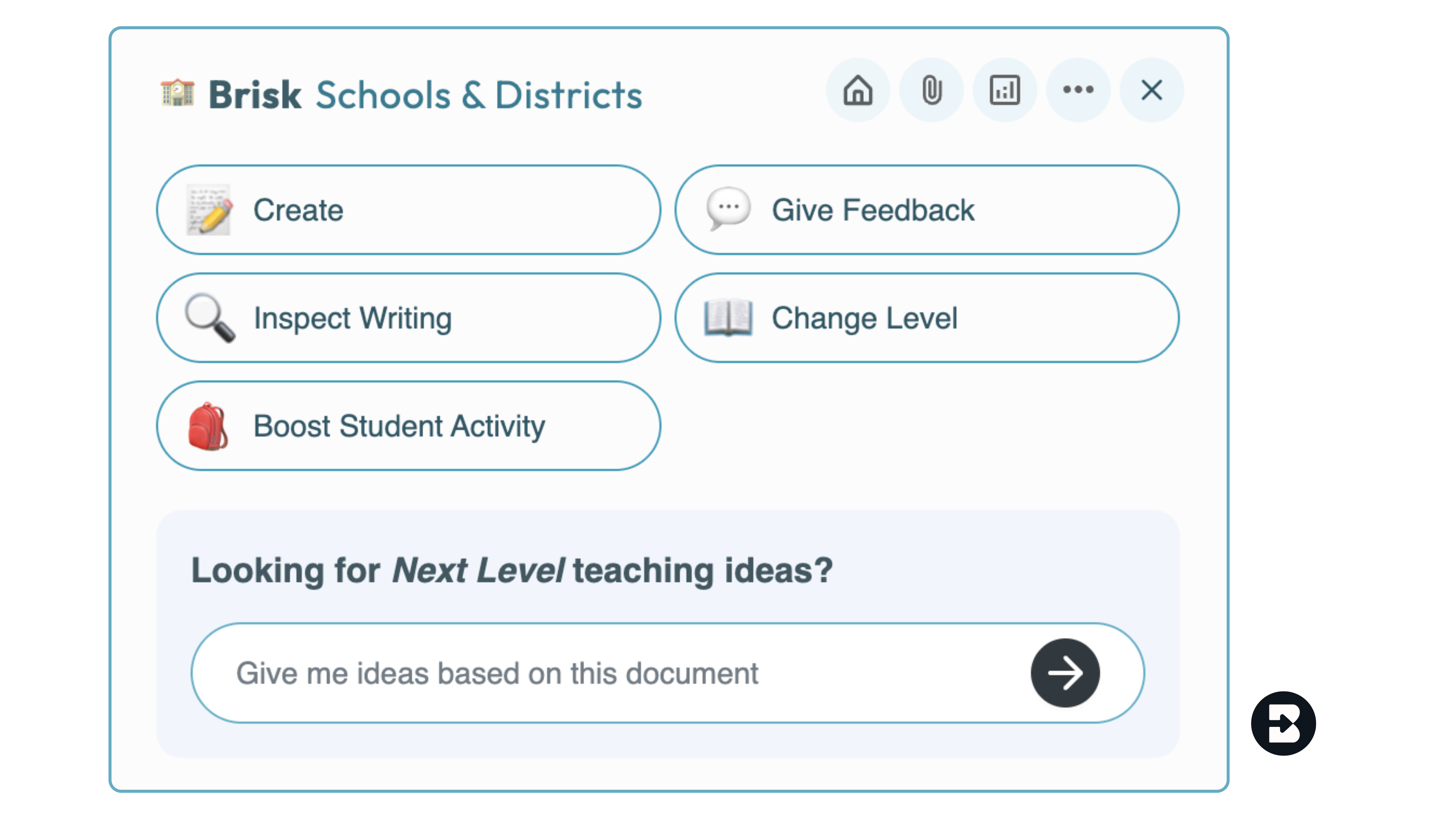
Teaching AI literacy matters
AI isn’t some far-off future thing — it’s here, and it’s already part of our daily lives (looking at you, TikTok algorithm).
Teaching AI literacy means preparing students to navigate a world full of AI without fear (or confusion). Think critically about the tech shaping their lives. Handle real-world problems with skills that actually matter.
Why teach AI literacy?
We could say “because it’s cool,” but here’s the real deal:
Future-ready skills
AI literacy builds creativity, critical thinking, and tech-savviness for the jobs students haven’t even dreamed of yet.
Ethical awareness
Develop responsible and informed approaches to AI, emphasizing societal and ethical considerations.
Engagement & real-world application
AI is in their phones, games, and classrooms already. Why not help them understand it better?
Here's how to get started:
Explain AI simply
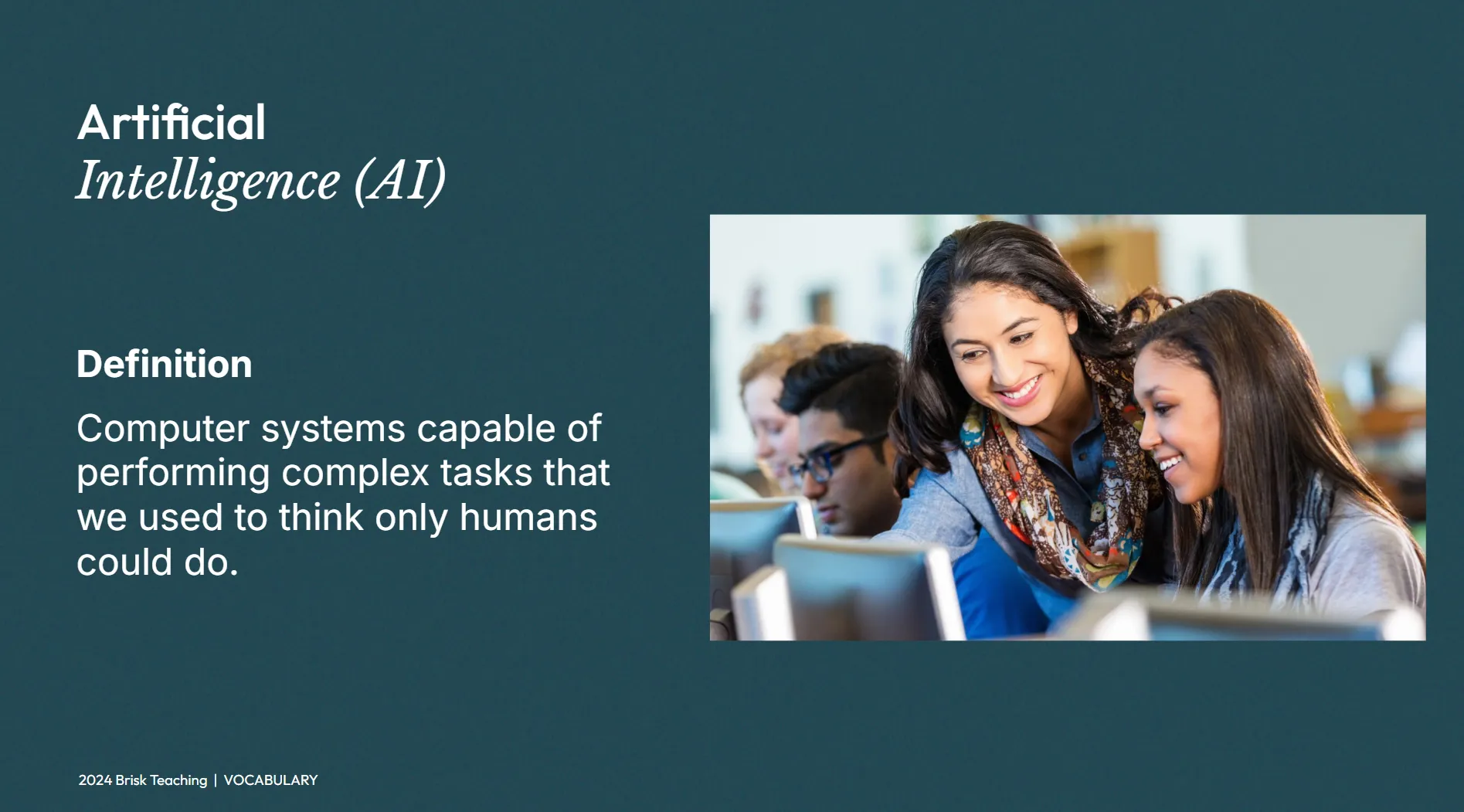
AI is just computer systems capable of performing complex tasks that we used to think only humans could do.
Relate AI to students' lives
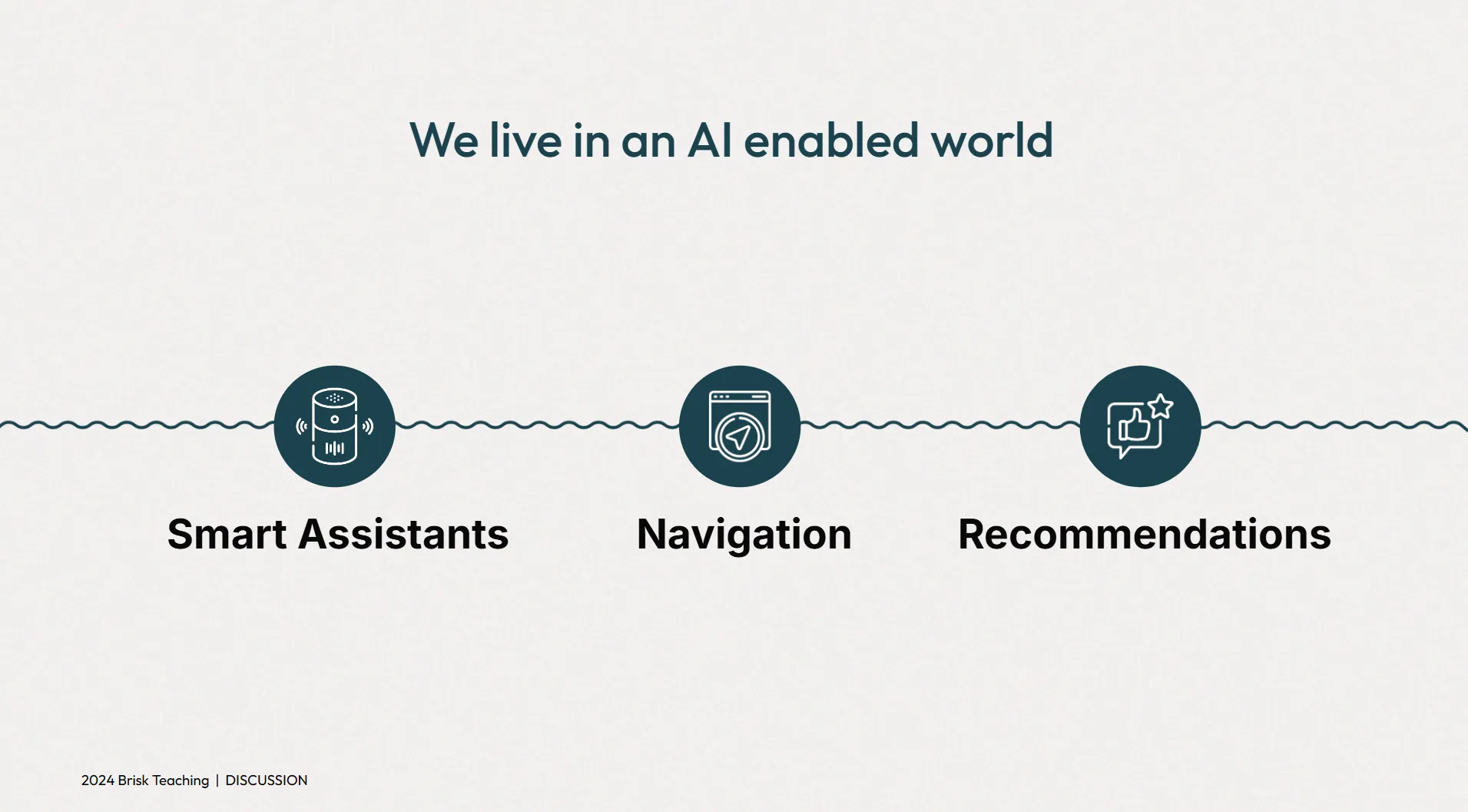
Point out how they use AI every day — whether it’s in their phone’s virtual assistant, their social media feeds, or even video games.
Use analogies
Compare AI to human brains or pets. For example, AI "learns" much like how a pet learns commands or how we learn new things in school.
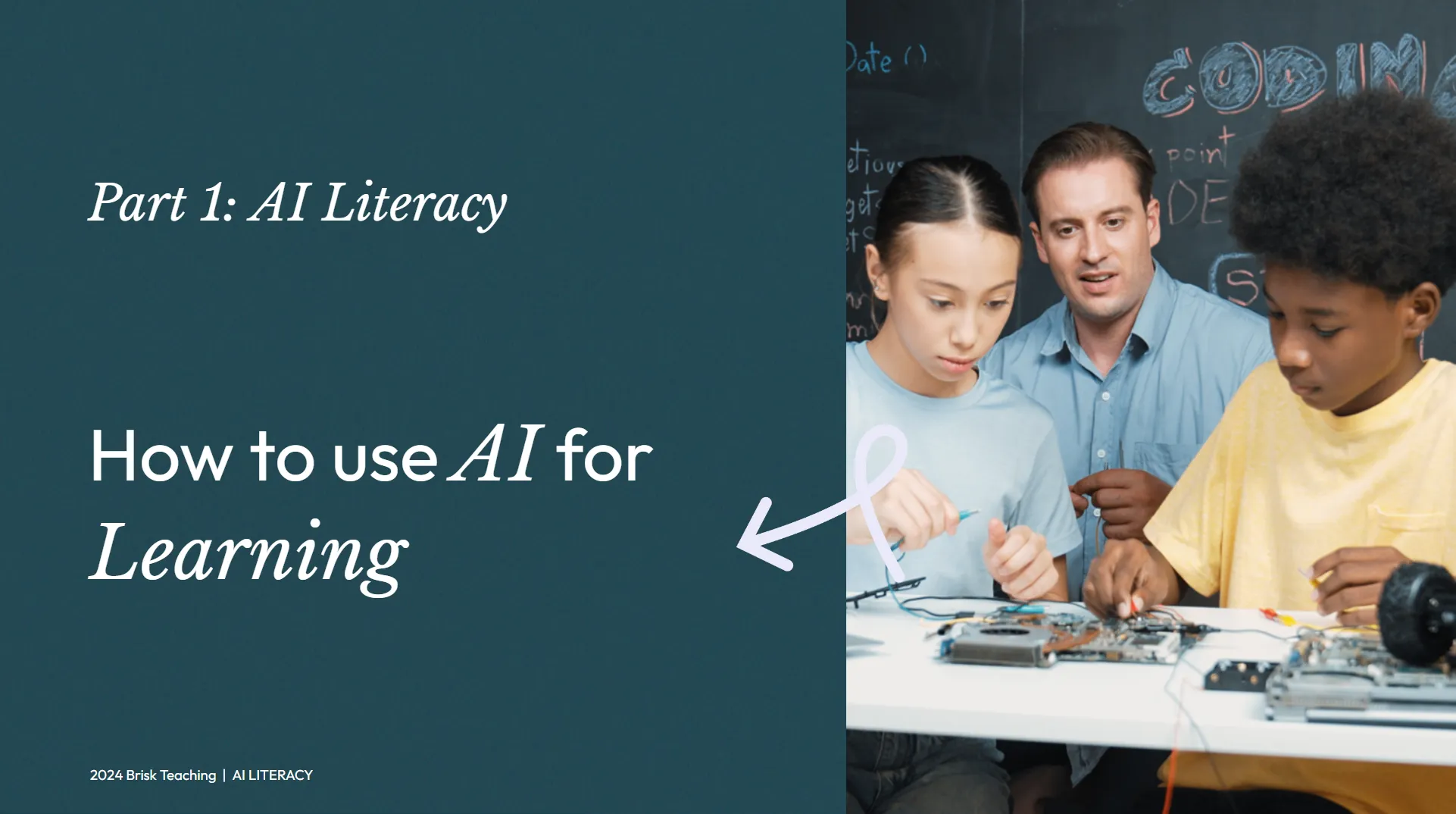
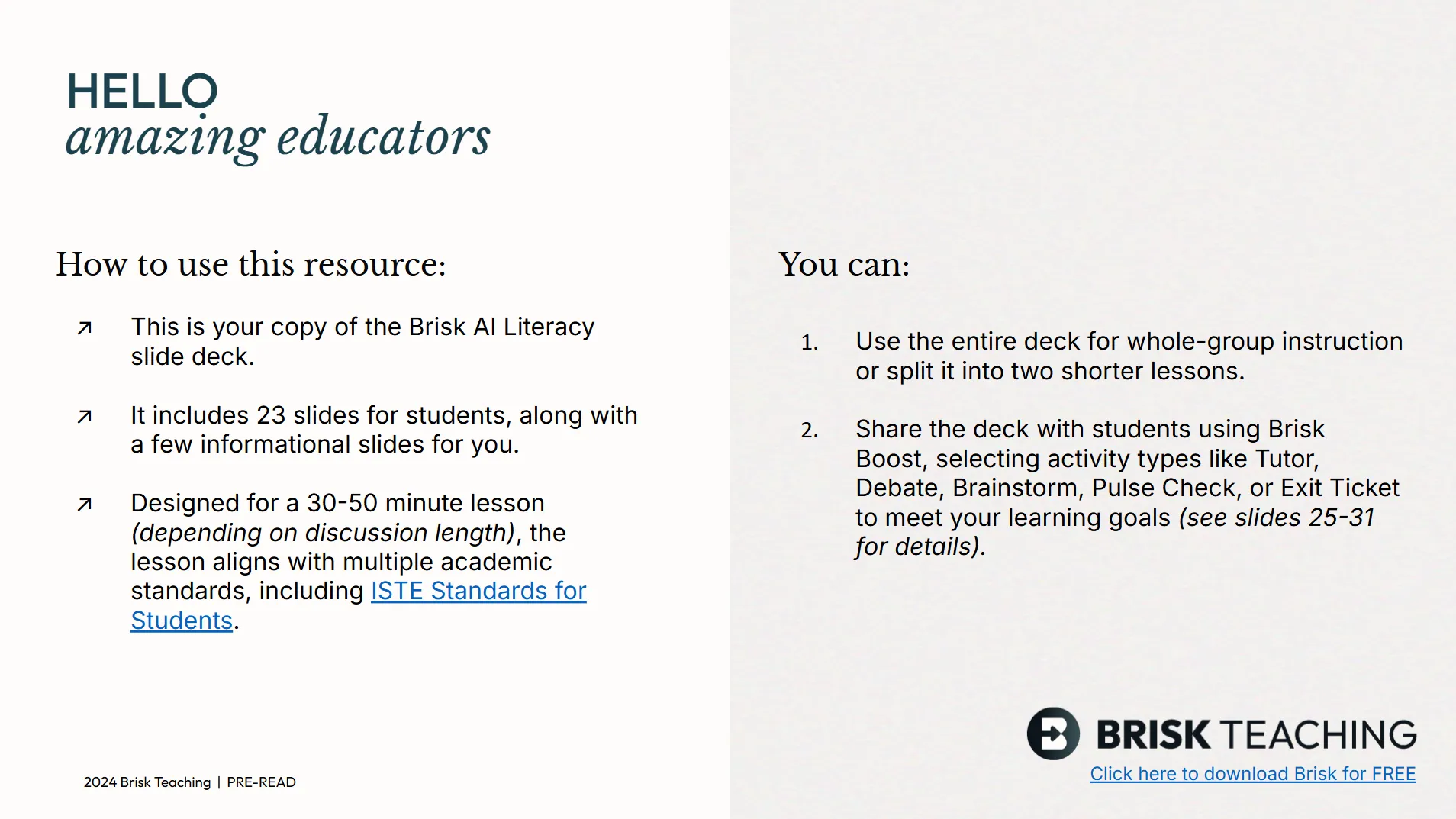
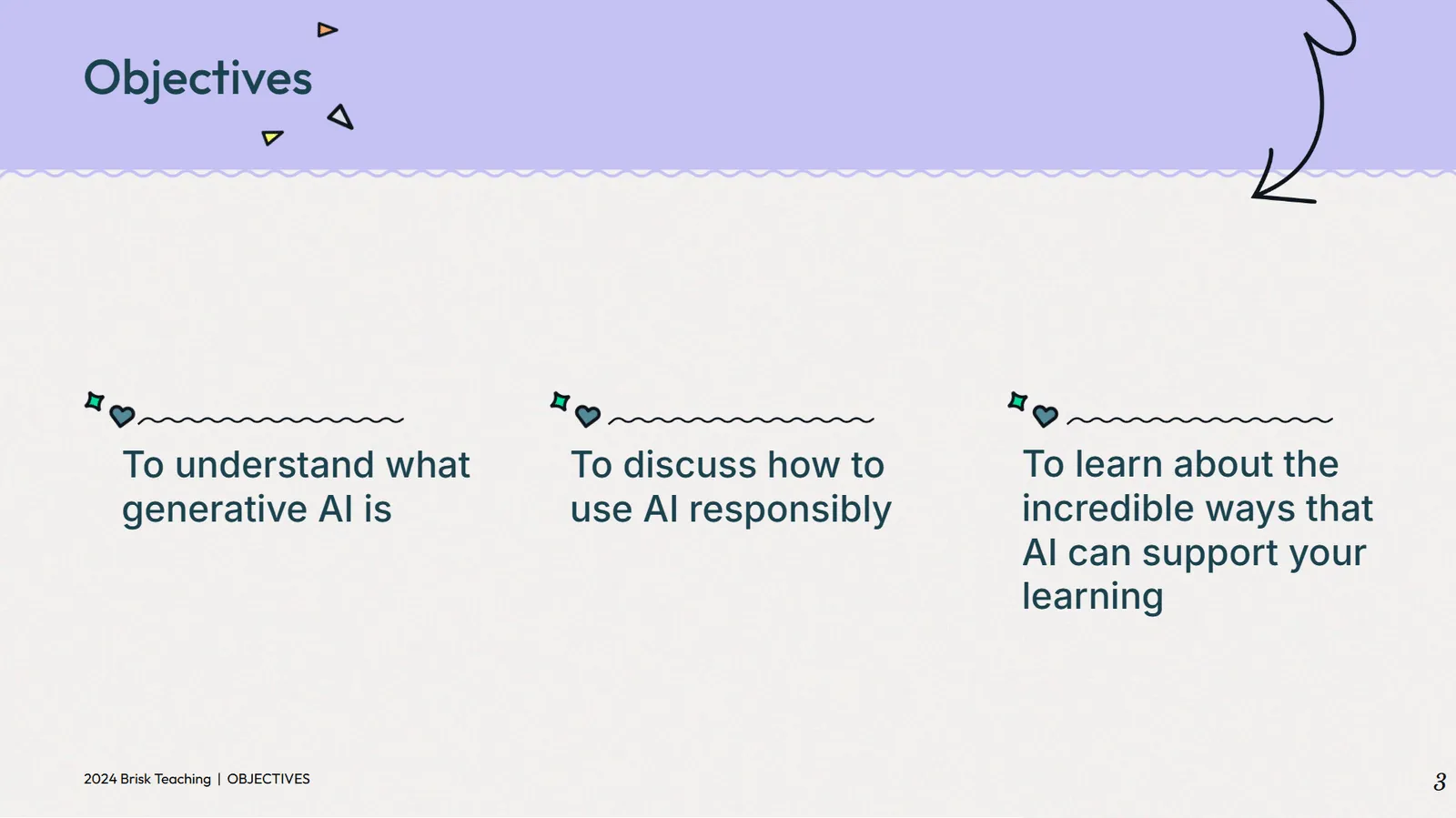
Grab this free AI Literacy Deck
Because who has time to make one from scratch? We did the work for you — just download, teach, and feel like the hero your students already think you are.
How Brisk Boost supports AI literacy
Need a way to teach AI literacy? Brisk Boost has you covered. It’s a safe, interactive tool where students can explore AI through engaging activities — and the teacher stays in the driver’s seat with full visibility and control.
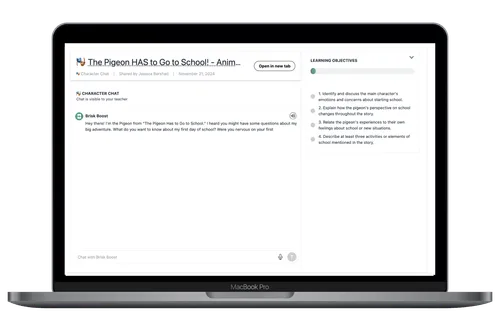
AI character chats & simulations
Hands-on role-play activities simulate real-world applications of AI, enhancing critical engagement and problem-solving skills.
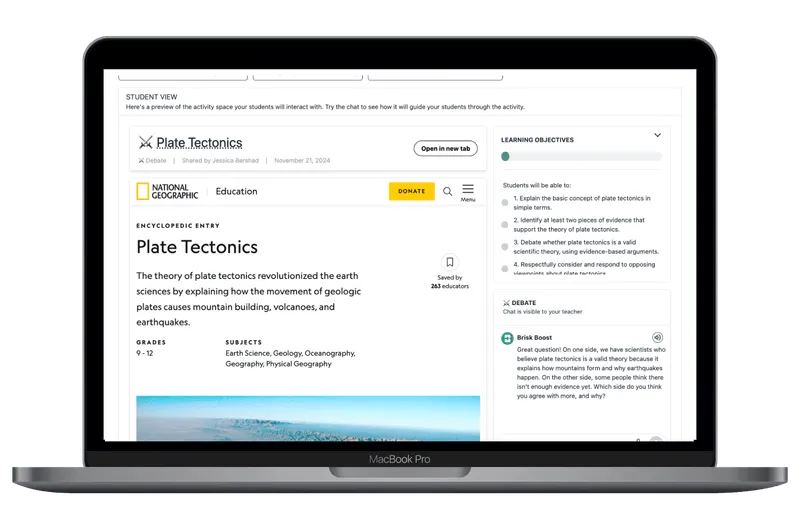
Interactive AI debates
Facilitate meaningful discussions on AI ethics, societal impact, and real-world use cases.
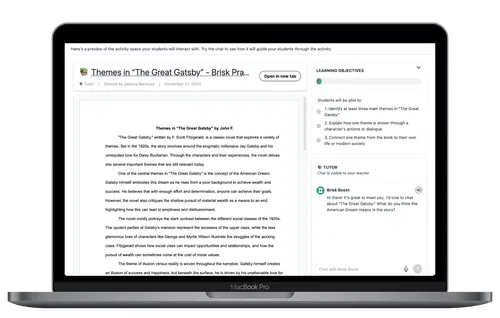
Custom AI activities & tutoring
Personalized learning opportunities that adapt to the needs of each student, strengthening comprehension of complex AI concepts.
Try a Brisk Boost activity
*For K–2 learners, these Boost activities also work well for the whole class.
Looking for additional AI literacy resources?
We've put together a list of some our AI Literacy favorites...
AI Literacy for Students
- Common Sense Education AI Literacy Lesson
- PBS Crash Course: AI
- Code.org
AI Literacy for Educators
- Brisk AI Literacy Deck
- Getting Students to Develop AI Literacy
- TeachAI: AI Guidance for Schools Toolkit
- ISTE AI in Education
- Code.org AI 101 for Teachers
- ISTE Simple Starters for AI Literacy
- Common Sense Media AI Literacy Lessons for Grades 6-12
- Digital Promise AI Literacy
- AIandYou Education Resources
- AI EDU AI Education Project
- AI Educators Downloadable Resources
AI Literacy for Administrators and Coaches
Measuring the impact of AI in your school
How do you know if your students are really “getting” AI? Measuring the impact of AI literacy goes beyond grades and tests — it’s about identifying how students engage, think critically, and apply what they’ve learned to the world around them.
Here’s what to keep an eye on:
Critical thinking in action
Are students asking deeper questions about how AI works or why it makes certain decisions? That’s a key sign they’re developing the analytical skills needed to engage with AI responsibly.
Engagement levels
Are students asking deeper questions about how AI works or why it makes certain decisions? That’s a key sign they’re developing the analytical skills needed to engage with AI responsibly.
Ethical conversations
AI literacy isn’t just about understanding the tech—it’s about asking “What if?” and considering the bigger picture. Pay attention to how students approach conversations about privacy, bias, and AI’s impact on society.
Pro tip
Use open-ended projects or class discussions to give students space to showcase their understanding. A student explaining AI concepts to their peers is a win for everyone.
Teaching AI literacy isn’t about cramming in more content; it’s about equipping the next generation to think critically, act ethically, and shape the future with confidence. Whether they’re building robots or debating AI ethics, you’ll see the payoff in their growth as learners and leaders.

Leverage the AI Literacy Framework
To support educators in their journey, we recommend exploring Digital Promise's AI Literacy Framework. This framework offers valuable guidance to understand, evaluate, and effectively use emerging AI technologies in educational settings.
Read more